Social stories

Keeping hands to yourself: a social story for preschoolers

When a preschooler hits, pushes or grabs, there is usually a big feeling behind it with nowhere to go: frustration over a toy, excitement that spills over, a friend who is too close. A social story gives that feeling a plan. It is a short, calm story, often told in your child’s own voice, that shows what happens, how it might feel and what they can do instead.

Below is a complete sample you can read or print, followed by what makes a good one and how to read it together.
Free sample story

My Hands at Preschool

StorySafari wrote and illustrated this story from the same idea the button below fills in, with a made-up boy named Sam.

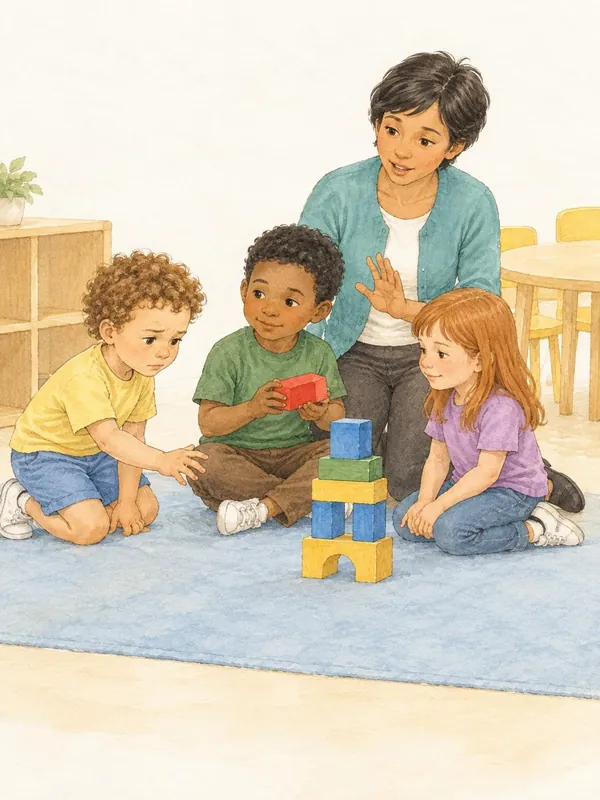
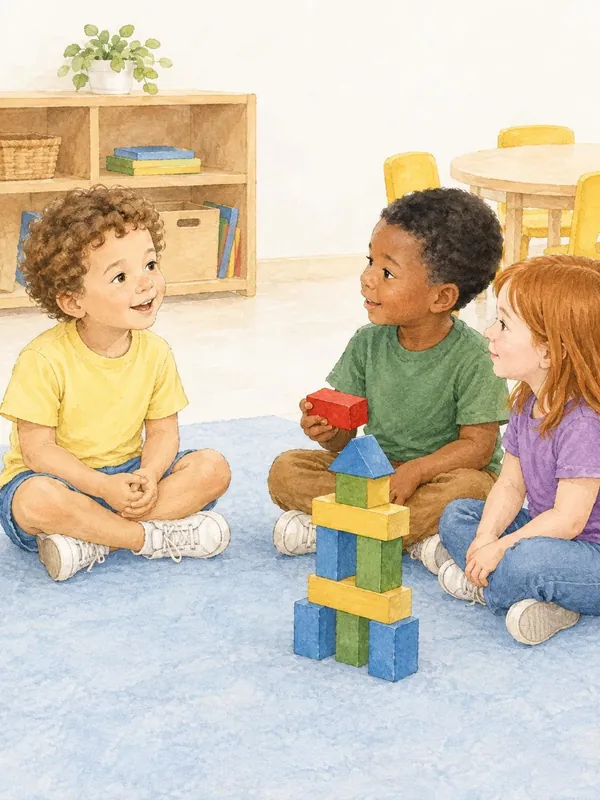
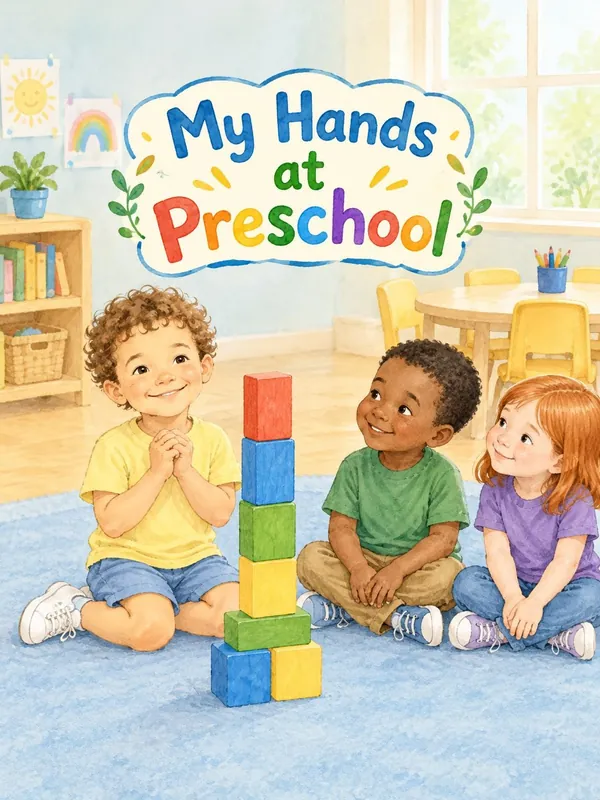
  1. Book cover: My Hands at Preschool. A curly-haired boy in a yellow t-shirt sits by a block tower with two friends, hands squeezed together.
    Cover
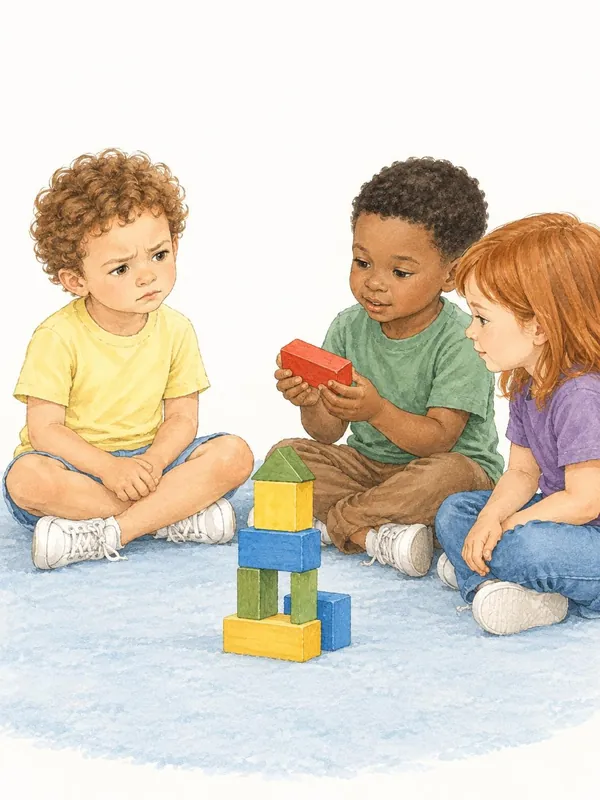
  2. Sam sits cross-legged with his hands in his lap, frowning a little, while a friend holds the red block.
    Page 1

    My friend is using the red block. I want a turn, too. Waiting feels hard. I feel frustrated, but I keep my hands in my lap.

  3. Sam reaches toward the block while his teacher kneels behind the children and raises a gentle hand.
    Page 2

    I want the red block. I lean toward it, but I do not touch my friend. My teacher reminds me, “Keep your hands to yourself.” I bring my hand back.

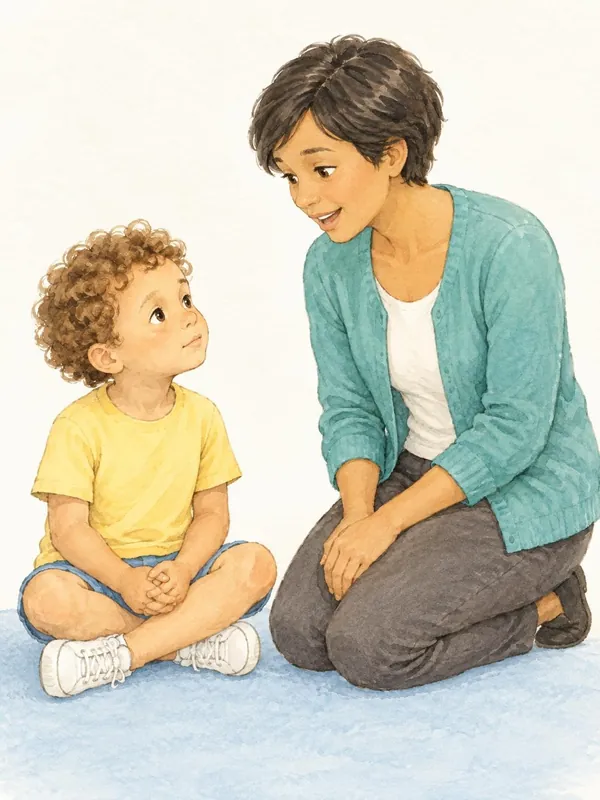
  4. The teacher kneels beside Sam and talks to him kindly. Sam listens with his hands in his lap.
    Page 3

    My teacher looks at me kindly. “It is okay to have big feelings,” she says. I listen. My feelings can be big, and my hands can stay in my lap.

  5. Sam sits calmly on the rug and breathes while two friends keep building the tower.
    Page 4

    My friend keeps building. I sit and take a deep breath. In…and out. I can wait while my friend places another block.

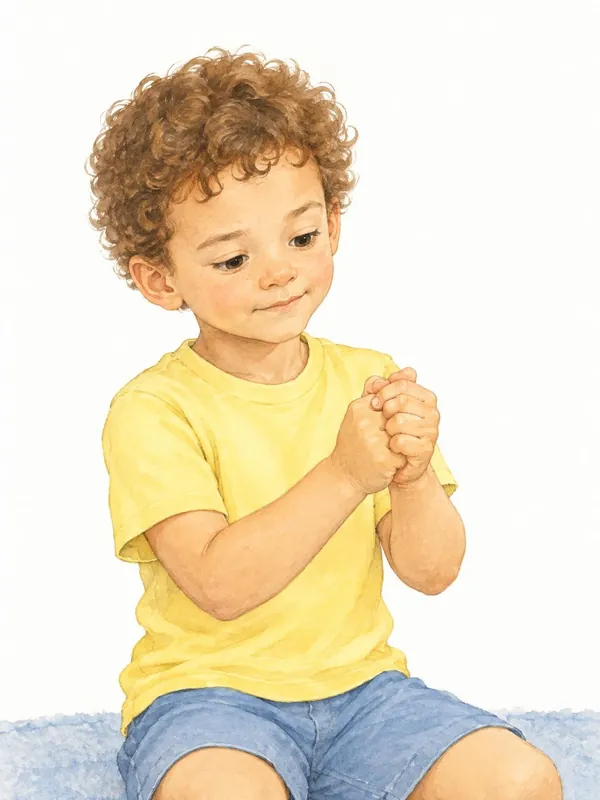
  6. Close-up of Sam squeezing his hands together in front of his chest.
    Page 5

    I squeeze my hands together in front of me. My hands stay close to my own body. My friend has space to keep building safely.

  7. Sam, hands together, turns to his friend and asks for a turn.
    Page 6

    I keep my hands together and look at my friend. “Can I have the red block when you are done?” I ask. My friend hears me and keeps building.

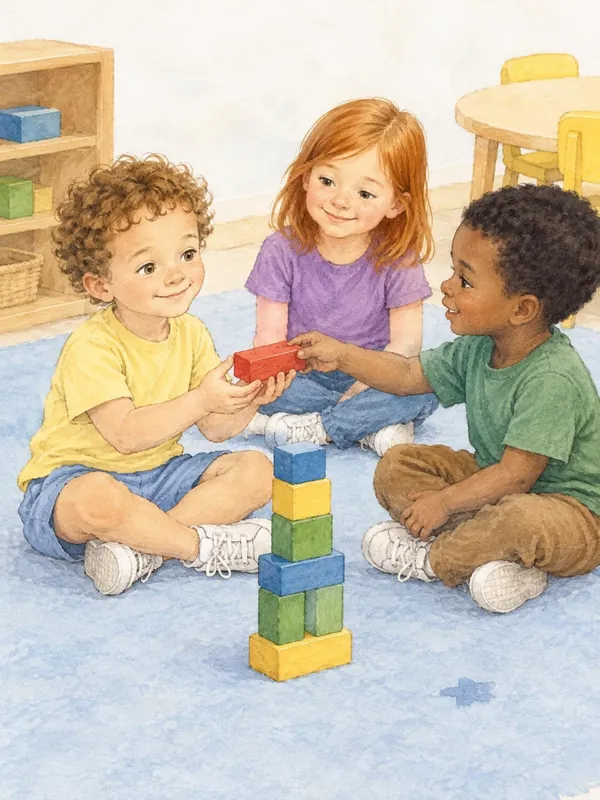
  8. Sam's friend hands him the red block and Sam takes it in both hands, smiling.
    Page 7

    My friend finishes with the red block. Then my friend gives it to me. I take it in both hands. I waited, and now it is my turn.

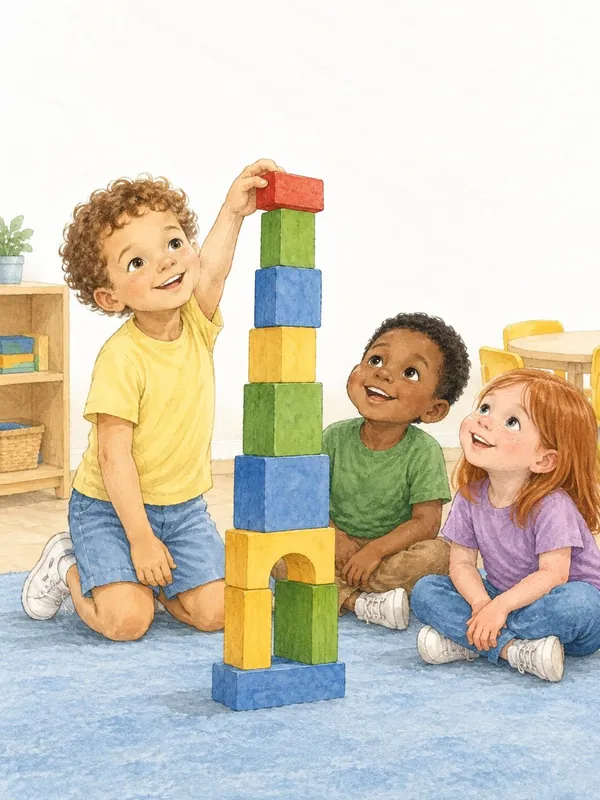
  9. Sam stretches up to put the red block on top of a tall tower while his friends watch.
    Page 8

    I place the red block on our tower. It makes the tower taller. I look up at it, and excitement bubbles inside me. My friends look up, too.

  10. Sam squeezes his hands together and smiles up at the tall tower with his friends.
    Page 9

    I feel excited. I take a deep breath and squeeze my hands together. “Our tower is so tall!” I say. My friends stay close as we admire what we built.

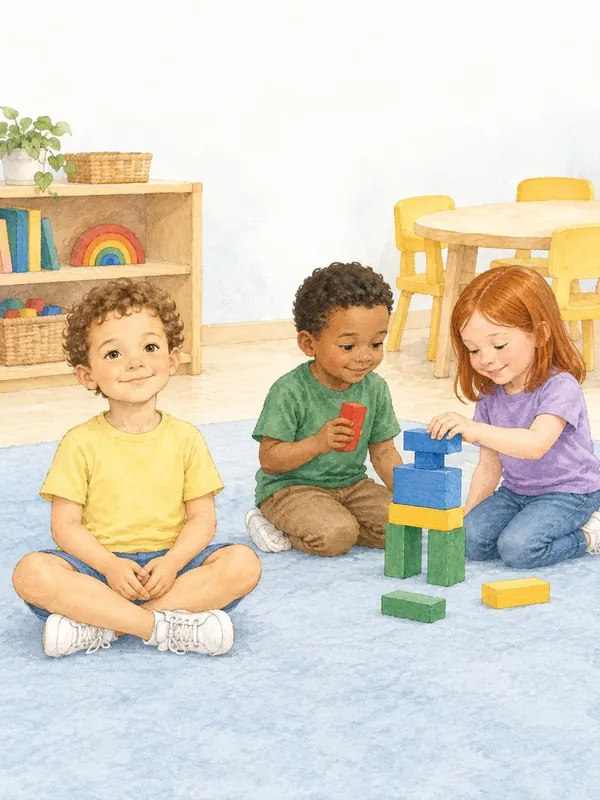
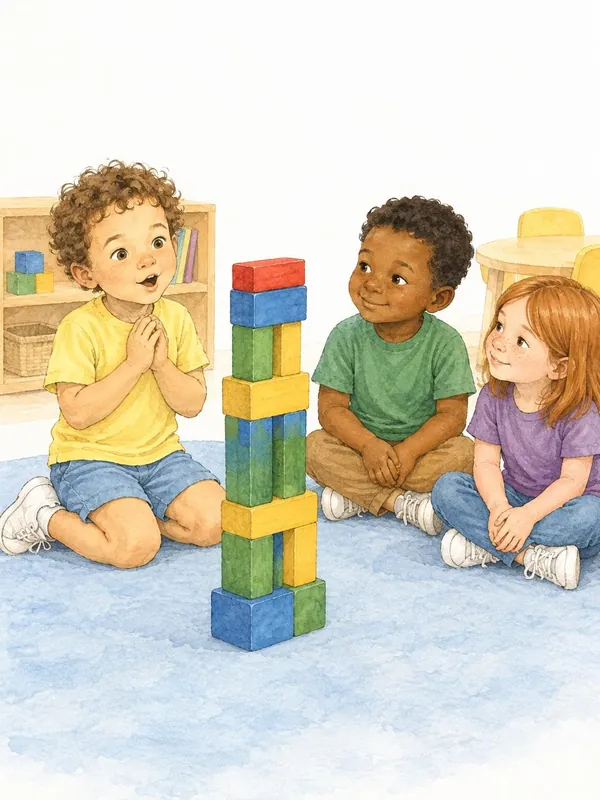
  11. Sam adds a green block while his two friends sit nearby with space between them.
    Page 10

    I place a green block above the red one. My friends and I keep our hands to ourselves, with space between our bodies. The block stays on the tower. We keep building together.

Make my child’s story

Make this story starring your child. The idea is filled in for you.

What a social story is (and isn’t)

Educator Carol Gray developed social stories in the early 1990s to help autistic students understand everyday situations. Today parents and teachers use them with all kinds of children, for anything from a first haircut to a fire drill.

A social story is:

  • Short and literal. Real places, real people and nothing pretend, so your child can picture the moment exactly as it will happen.
  • Mostly description. It explains what happens and how it might feel, with only a few “I can” sentences about what to do.
  • Positive. It says what hands can do (“I keep my hands in my lap”), not just “don’t hit”.
  • Calm. It is read for understanding, never as a consequence.

What a good “hands to myself” story includes

  1. The place where it happens. The block corner, the carpet at circle time, the line by the door. Use the spot where your child actually struggles.
  2. The feeling, named plainly. “I feel frustrated.” “I feel excited.” Children often hit when a feeling arrives faster than words.
  3. Something to do with their hands and body. A deep breath, squeezing hands together, hands in the lap or in pockets. Pick one or two and keep them the same every time.
  4. Words to use. “Can I have a turn when you’re done?” “Stop, please.” Short phrases your child can actually say.
  5. Why it matters, in kid terms. “My friends’ bodies stay safe.” “We can keep playing.”
  6. Reassurance. Big feelings are okay. The story is about what to do with them, not about having them.

Two small details make a big difference. Call grown-ups by their role (“my teacher”), so the story still fits when the adult changes. And use the same words the classroom uses: if school says “safe hands”, say “safe hands” too.

How to read it with your child

  • Pick a calm moment. Bedtime or a quiet afternoon works better than the minutes after a hard drop-off.
  • Read it daily for a week or two, then before the situations that are hard for your child.
  • Practice the plan together. Take the deep breath, squeeze hands, say the asking words out loud. Make it a game.
  • Let your child point. Ask “What is Sam’s body doing here?” on each page.
  • Notice it in real life. “You squeezed your hands, just like in your story!” Specific praise ties the story to the moment.
  • Share it with the teacher, so home and school use the same words and the same plan.

A story starring your own child, in their own classroom, with their own name, often lands better than a story about someone else. That is what StorySafari is for.

Common questions

What age is a social story about keeping hands to yourself for?

Most often ages 3 to 7: any child who enjoys picture books. For younger children keep one or two short sentences on a page; older children can handle a little more detail about why it matters.

Should a social story be written in first person?

Usually, for young children. Hearing “I take a deep breath” helps a child picture themselves doing it. Third person (“Sam takes a deep breath”) also works, especially for a child who doesn’t like being singled out.

How often should we read it?

Once a day at a calm time for a week or two, then before the moments that are hard for your child, such as drop-off or free play. Reading it right after an incident can feel like a punishment, so wait until everyone is calm.

Are social stories only for autistic children?

No. The approach was first developed for autistic students, and many autistic children find them helpful, but parents and teachers use social stories with all kinds of children to prepare for new or tricky situations.

Can I print this story?

Yes. Use the Print this story button above the sample. It prints the cover and each page with its picture, one page per sheet.

What if my child keeps hitting?

A story is one tool, not the whole plan. If hitting is frequent, new or getting worse, talk with your child’s teacher and pediatrician so everyone uses the same words and you can look at what is behind it.

Make this story starring your child

Add your child’s photo or describe them, and StorySafari writes this social story with them as the one taking a breath and asking for a turn. The idea is filled in for you; change any detail to match their classroom. Preview the story and cover free.

Make my child’s story