What creative writing practice actually builds
Handwriting and spelling are the visible part, and they are the part most easily graded, so they get most of the attention. The skills underneath are harder to see and considerably more durable.
- Sequencing. Deciding what happens first, next, and last — the same structural thinking that later shows up in essays, explanations, and instructions.
- Causation. A story only works if events cause each other. Children who write stories practice "and therefore" instead of "and then."
- Perspective. Writing a character who wants something different from what your child wants is early, unforced empathy practice.
- Decision-making under ambiguity. There is no right answer to what happens next. Choosing anyway, and living with it, is a genuinely hard skill.
- Revision. Discovering that a first attempt can be improved rather than simply being finished or wrong.
None of these require a child to enjoy writing in the handwriting sense. They require a child to have a story they want to tell.
What to expect at each age
Ages 5–6: telling, then writing
Children this age can invent far more story than they can physically write down. Expect a few sentences on the page and a great deal more said out loud. Dictation is not cheating here — it lets the storytelling develop while handwriting catches up on its own schedule. Stories tend to be lists of events rather than plots, and that is exactly right for the age.
Ages 7–8: the first real stories
Beginnings, middles, and ends start showing up without prompting, and characters begin wanting things. This is the age where a child will happily write a page and then read it aloud to anyone in the room. Endings are usually abrupt — "and then they went home" — which is worth noticing but not worth correcting yet.
Ages 9–11: intention and voice
Children start making choices on purpose: withholding information, writing a joke they know will land, ending on a line they are pleased with. They also become self-critical, sometimes sharply, and will abandon a piece they have decided is bad. Planning before drafting begins to help rather than hinder, and revision becomes possible if it is framed as making it better rather than fixing mistakes.
How to help a child who is stuck
Nearly every stall is the blank page rather than the writing. Four things that reliably restart a story, roughly in order of how often they work:
- Ask what the character wants. A character who wants something can be blocked, and a blocked character is a plot. This single question unsticks more stories than any other.
- Ask what the worst thing that could happen is. Children usually know immediately, and they are usually delighted to do it to their character.
- Offer three options, not one. A suggestion invites yes or no. Three options invite a decision, and the child often rejects all three and produces a fourth — which is the goal.
- Move the scene. If the story has stalled in a room, take the character outside. Motion generates events.
What to avoid: writing the next sentence for them. It ends the immediate problem and quietly transfers ownership of the story, and children notice.
How to respond when they hand you their story
This moment matters more than any prompt. A child who has just written something is asking whether it was worth doing, and the answer they get shapes whether there is a next one.
Respond as a reader first. Say what you noticed — a specific line, a decision the character made, a word choice that surprised you. Specificity is what makes praise land; "this is great" is heard as politeness, while "I did not expect the fox to lie about the key" is heard as having actually read it.
Ask a question you genuinely want answered. What happened to the brother? Was the door always locked? Children take questions as evidence that the story worked, and questions frequently produce a sequel.
Save spelling and grammar for a separate pass, and only when the piece is headed somewhere — printed, mailed, displayed. Editing a first draft in front of its author teaches that the writing was a test rather than a story.
Handwriting, typing, and dictating
For creative writing specifically, composition and transcription are different skills, and letting the slower one throttle the faster one costs you stories. A seven-year-old with vivid ideas and laborious handwriting will write two sentences and stop — not because the ideas ran out, but because the hand did.
Typing or dictating lets the story run at the speed of the thinking. Handwriting practice still matters; it just does not have to happen during the part where your child is trying to invent something. Kids who write more stories generally end up writing more of everything.
Using StorySafari for writing practice
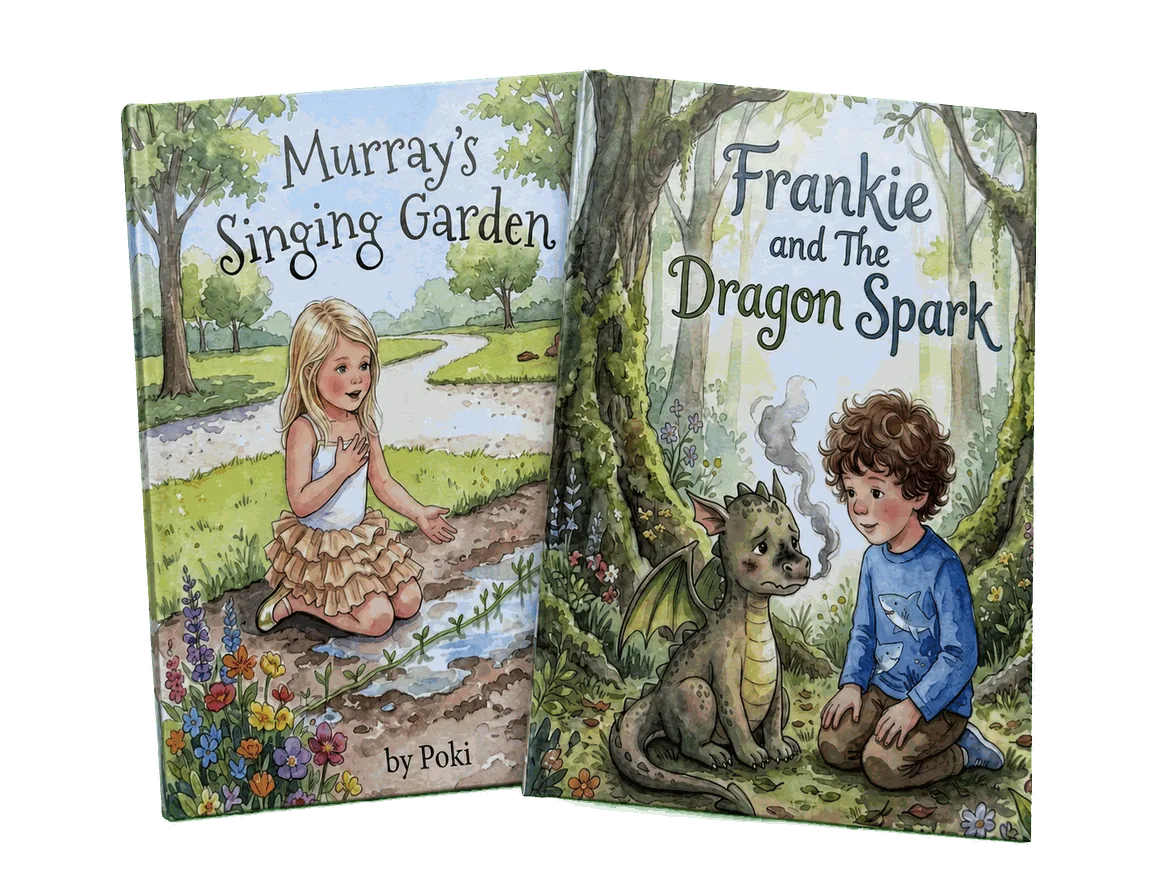
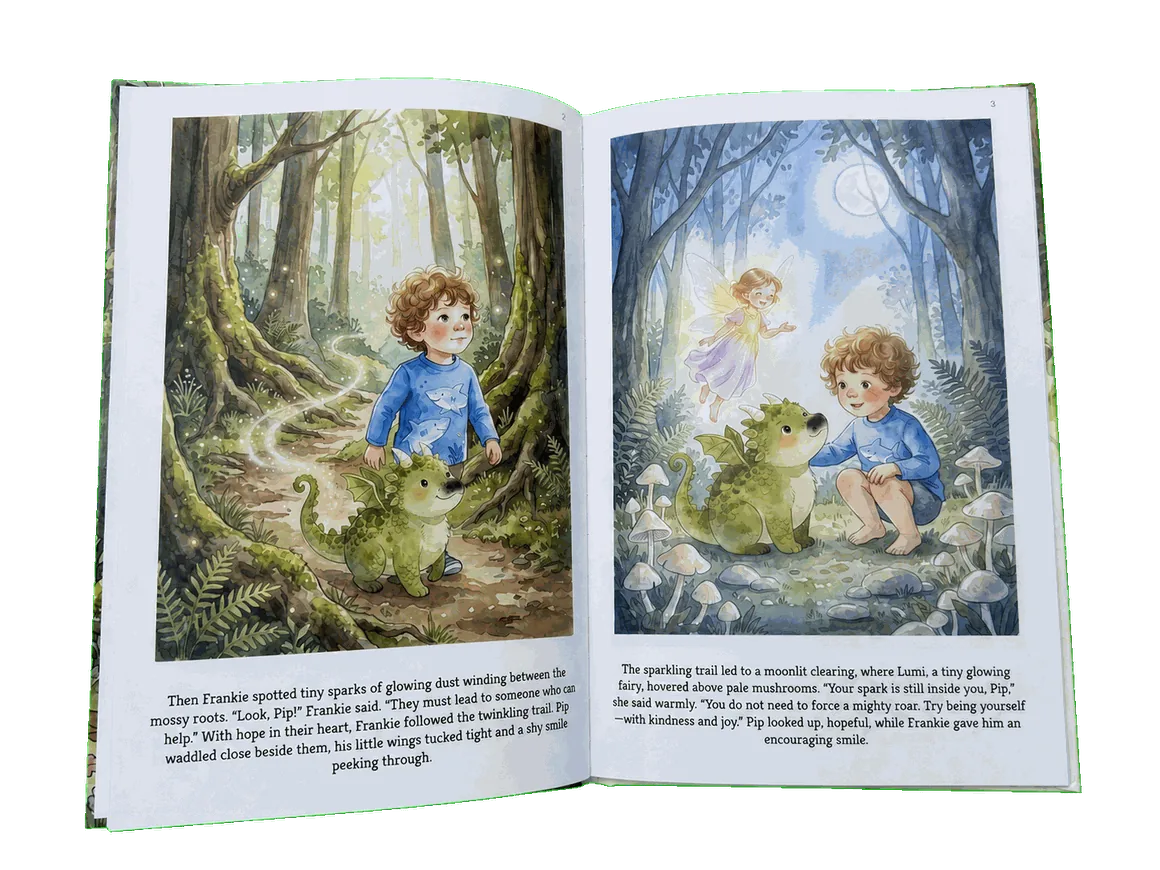
On the web, StorySafari has a mode where your child writes every page themselves, in their own words, and StorySafari illustrates what they wrote. Their sentences are preserved exactly as typed beneath each picture — misspellings included, unless you choose to edit them.
That detail does more work than it sounds like. Seeing your own sentence sitting under a finished illustration is a strong argument that the sentence was worth writing, and it is the reason children ask to make a second one. They can write their own illustrated children’s book page by page, then print it if it turns out well.
 StorySafari