Social stories

Fire drills: a social story for kids who find the alarm scary

For many children, the scariest part of a fire drill isn’t fire at all. It’s the alarm: sudden, very loud and impossible to predict. Children who are sensitive to noise, or who find surprises hard, can stay upset long after the drill ends. A social story helps by making the drill predictable. It is a short, calm story, told in your child’s own voice, that walks through every step from the first ring to walking back inside.

Below is a complete sample to read or print, then how to prepare your child before the next drill.
Free sample story

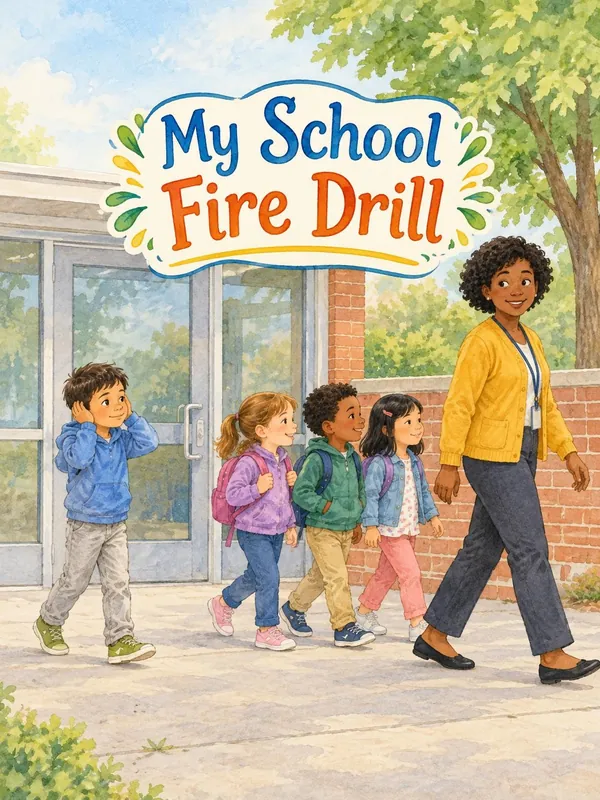
My School Fire Drill

StorySafari wrote and illustrated this story from the same idea the button below fills in, with a made-up boy named Omar.

  1. Book cover: My School Fire Drill. A boy in a blue hoodie walks outside the school in a line of classmates behind his teacher.
    Cover
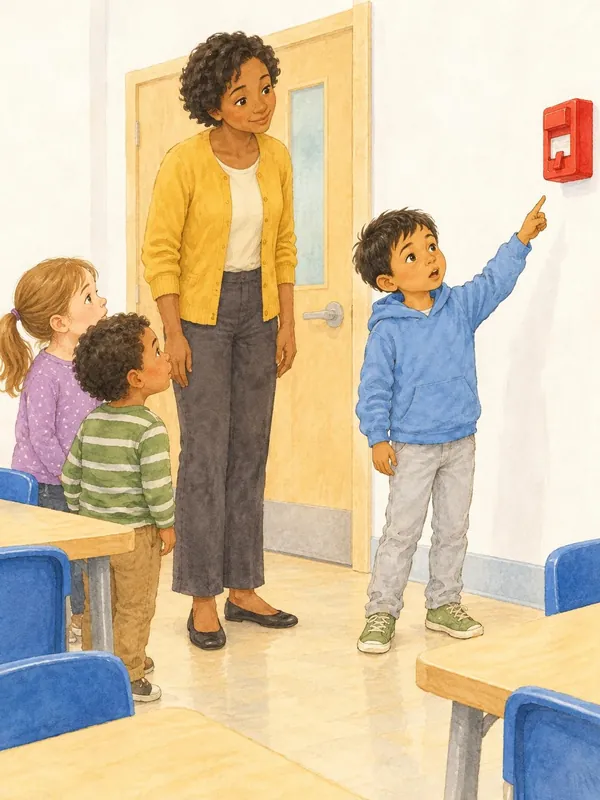
  2. Omar points up at the red fire alarm on the classroom wall as his teacher and classmates turn toward it.
    Page 1

    The fire alarm rings in my classroom. It is very loud, and I feel scared. My teacher and classmates turn toward the alarm. I turn too.

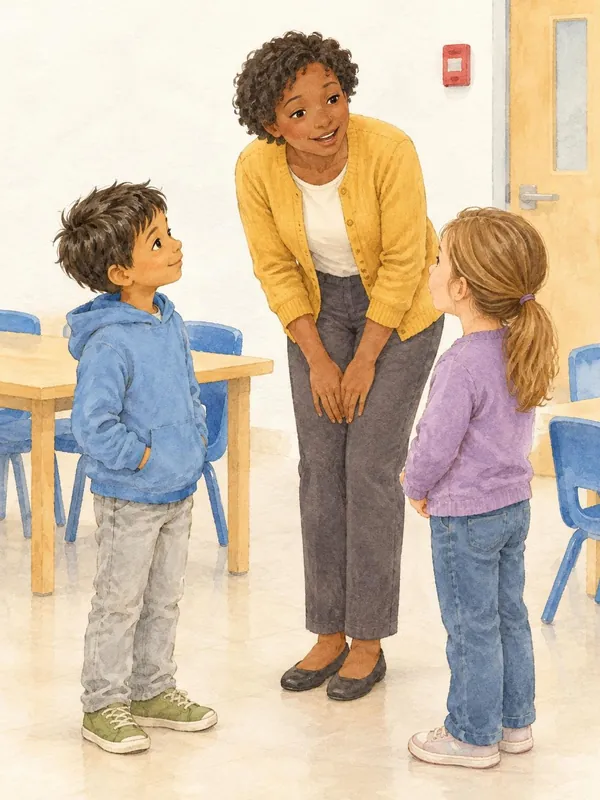
  3. Omar's teacher leans down and explains the fire drill to Omar and a classmate.
    Page 2

    My teacher says, “A fire drill is practice. It helps us know how to stay safe.” I listen. My teacher will show us what to do.

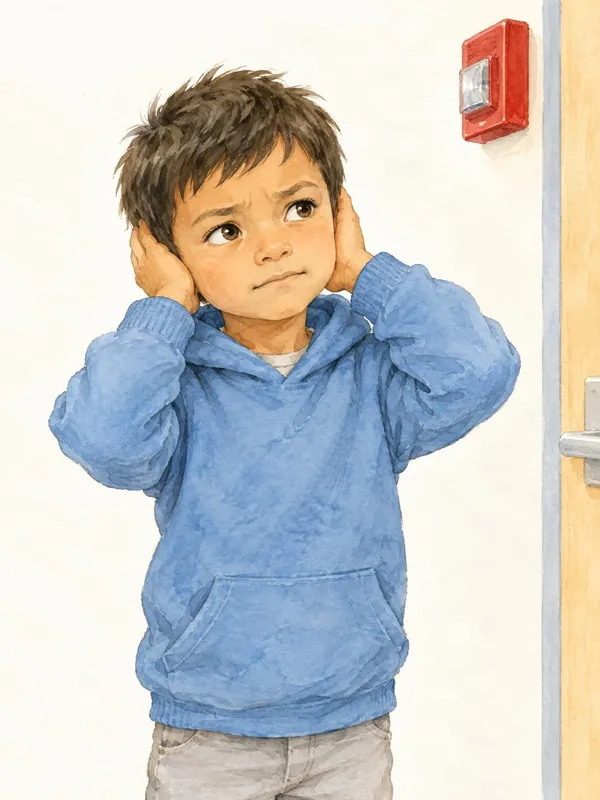
  4. Omar covers both ears with his hands.
    Page 3

    The alarm is still too loud for me. I cover both ears with my hands. I can listen to my teacher when the sound feels too big.

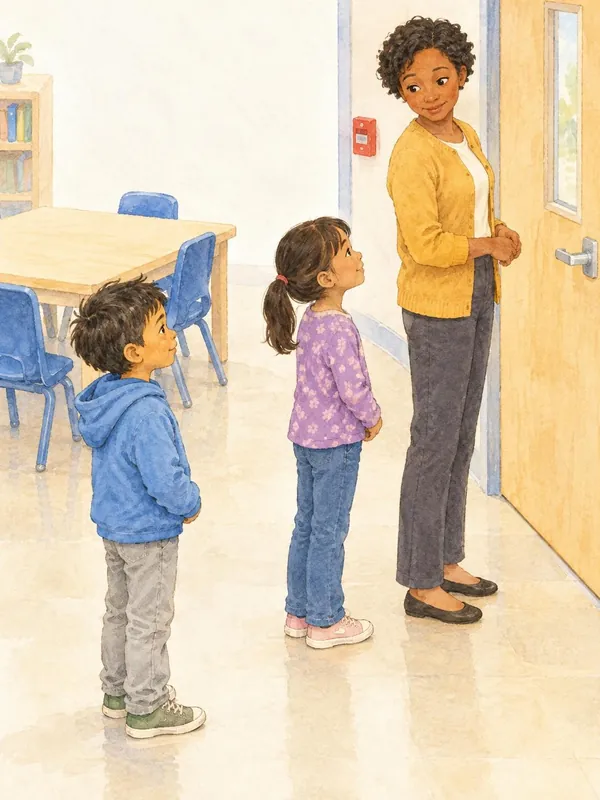
  5. Omar lines up by the classroom door with a classmate while his teacher waits.
    Page 4

    I stop what I am doing. My classmates line up by the classroom door, and I join them. I stay behind my classmates and look toward my teacher.

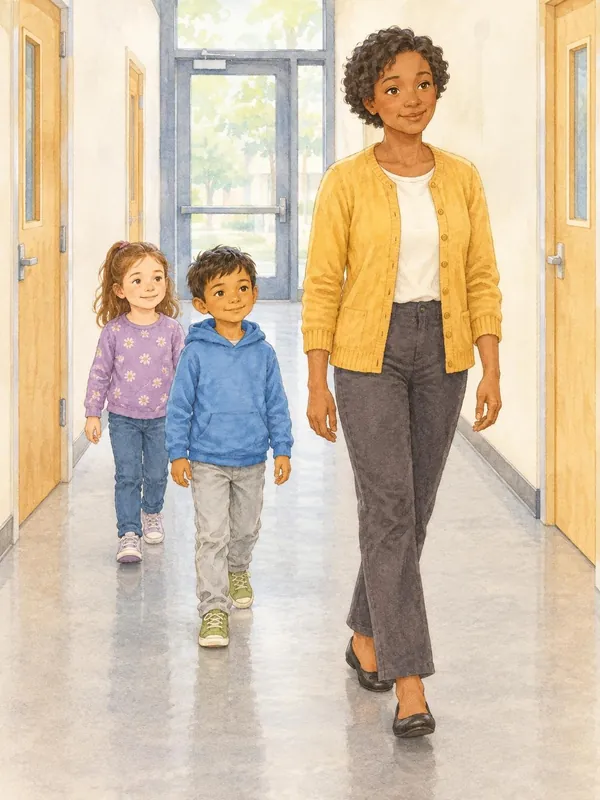
  6. Omar's teacher leads the class down the school hallway, and Omar walks behind her.
    Page 5

    My teacher leads us down the hallway. My classmates walk behind her, and I follow them. We walk together. We do not run.

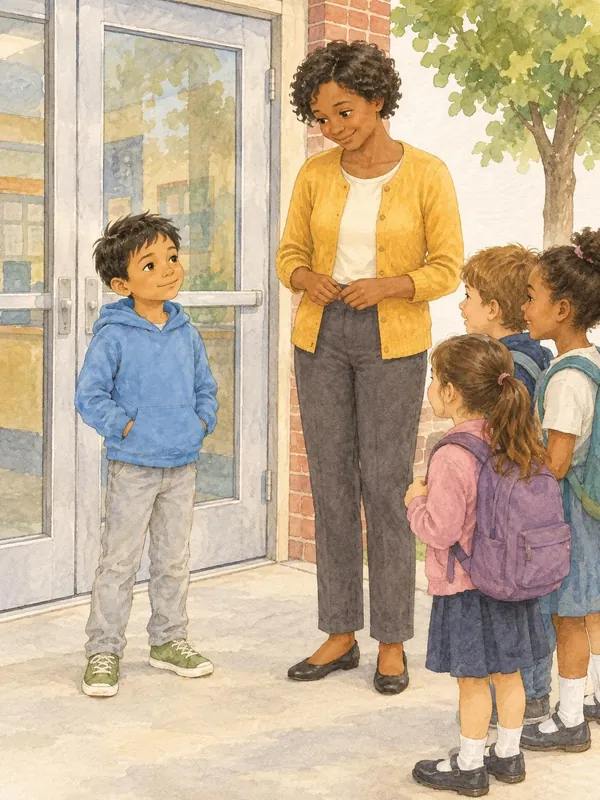
  7. Omar stands outside the glass exit door with his teacher and classmates.
    Page 6

    I follow my teacher through the glass exit door. My classmates walk outside with me. We keep together as we go out.

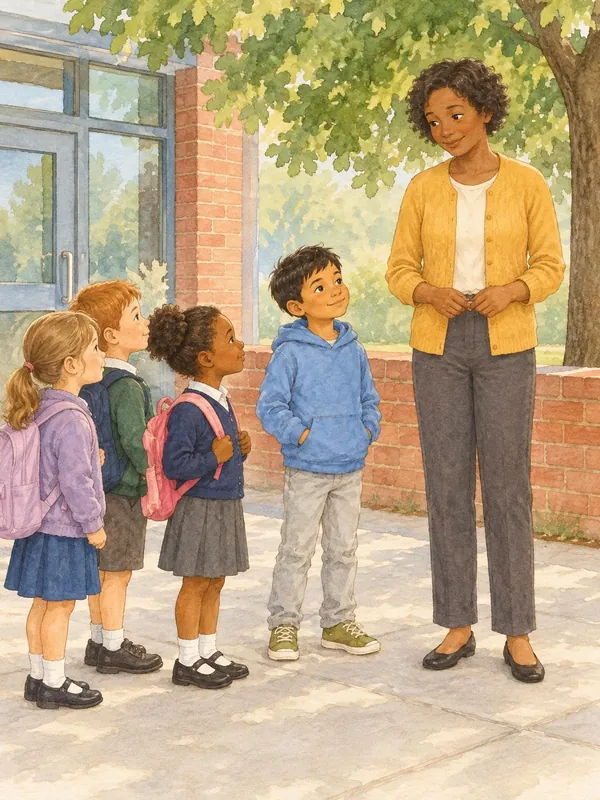
  8. Omar waits outside in a line with his class while his teacher stands with them.
    Page 7

    I walk with my class to our spot by the tree. My teacher waits with us. I stay in our spot until my teacher says what to do.

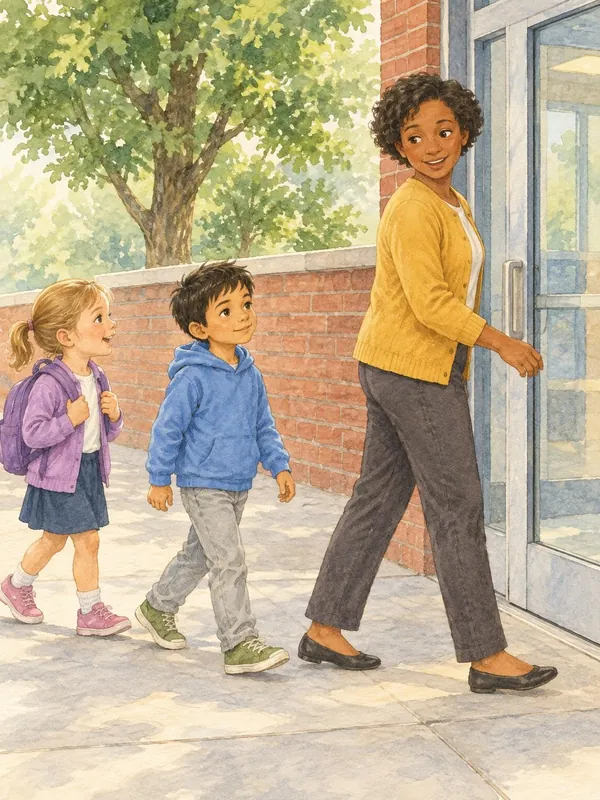
  9. Omar's teacher walks back toward the door, and Omar follows his classmates.
    Page 8

    “We can go back inside,” my teacher says. She walks toward the glass exit door. I follow my classmates from our spot.

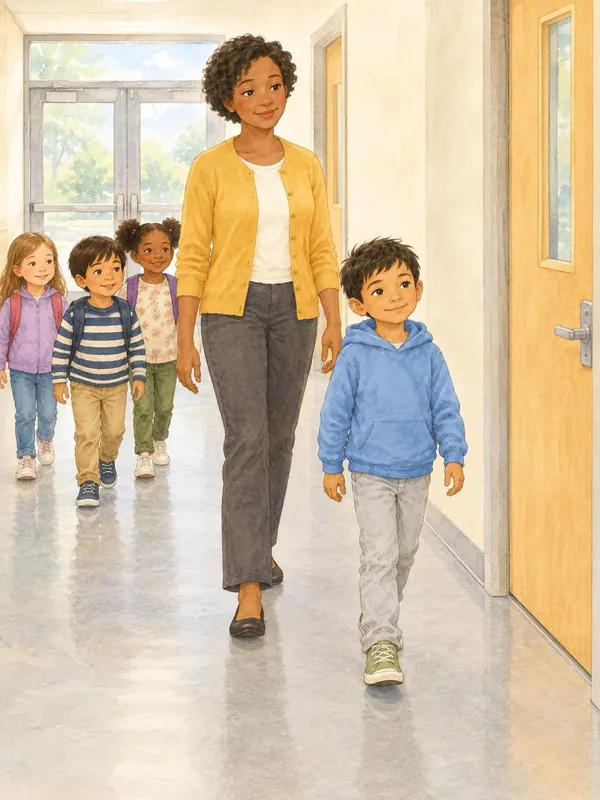
  10. Omar walks back down the hallway with his teacher and classmates.
    Page 9

    We walk back through the hallway. My teacher leads the way, and my classmates follow. I walk with them toward our classroom.

  11. Omar and two classmates stand in their classroom while their teacher smiles at them.
    Page 10

    I walk through the classroom door with my class. My teacher smiles at us. “The drill is over,” she says. I smile too. We are back inside.

Make my child’s story

Make this story starring your child. The idea is filled in for you.

What a good fire drill story includes

  1. That it’s practice. “A fire drill is practice, so everyone knows how to stay safe.” This is the sentence that takes the fear down a notch.
  2. The noise, named honestly. “It is very loud, and that can feel scary.” Then a plan for it: covering ears, or ear defenders if the school allows them.
  3. Each step in order. Stop, line up, follow my teacher, walk outside, wait in our spot, walk back in.
  4. Walking, not running. Said calmly, as what the class does, not as a warning.
  5. A clear ending. “The drill is over.” Children who worry about the alarm need to know it stops.

Keep fire itself out of it. A drill story is about the routine, and pictures of flames can add a fear the drill never had.

Preparing your child

  • Ask the school about drills. Some schools will tell families of children who find drills hard, or let the child know just before.
  • Listen to an alarm sound together, quietly at first, while your child covers their ears. Turn it up a little only if they want to.
  • Pack ear defenders if the school allows them, and practice putting them on fast.
  • Walk the route. If you can, look at the exit door and the meeting spot at pickup time.
  • Share the story with the teacher, so school uses the same steps and words.
  • Read it at a calm time, every day for a week before a drill, and again that morning if you know it’s coming.

Common questions

Why are fire drills so scary for some kids?

Mostly the noise and the surprise. School alarms are designed to be loud, and drills often aren’t announced. Children who are sensitive to sound or to sudden changes can find both hard.

Can my child wear ear defenders during a fire drill?

Many schools allow it, especially when a teacher knows a child struggles with loud sounds. Ask your child’s teacher, and practice putting them on quickly at home.

Should a fire drill story mention fire?

Keep it to the routine. The story’s job is to make the drill predictable, and scenes of flames can add a new worry.

What age is a fire drill social story for?

Preschool through the early grades, and older children who still find alarms hard. Adjust the sentence length to your child.

Can I print this story?

Yes. Use the Print this story button above the sample. It prints the cover and each page with its picture, one page per sheet.

Make this story starring your child

Add your child’s photo or describe them, and StorySafari writes this social story with them as the one who covers their ears, lines up and walks outside with the class. The idea is filled in for you; change any detail to match their school. Preview the story and cover free.

Make my child’s story