Social stories

Personal space: a social story for kids

Some children love to be close: leaning on a friend in line, hugging a classmate who didn’t ask for it, sitting right on top of someone at circle time. It usually isn’t rudeness. Personal space is invisible, and young children need a way to see it. A social story about a “space bubble” gives them one: a short, calm story in their own voice that shows how much room to leave and what to do when they want to be close.

Below is a complete sample to read or print, then how to teach personal space so it sticks.
Free sample story

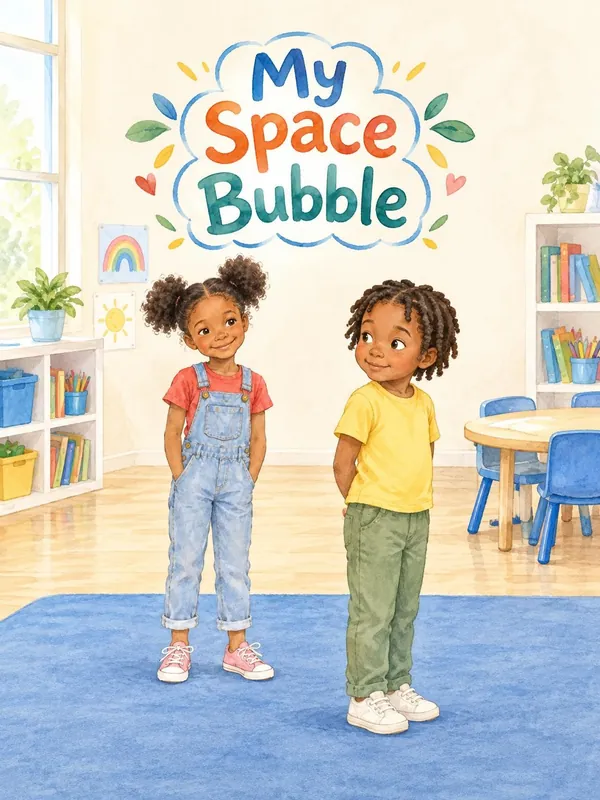
My Space Bubble

StorySafari wrote and illustrated this story from the same idea the button below fills in, with a made-up girl named Ava.

  1. Book cover: My Space Bubble. A girl with two hair puffs and denim overalls stands on a classroom rug, a little apart from a friend.
    Cover
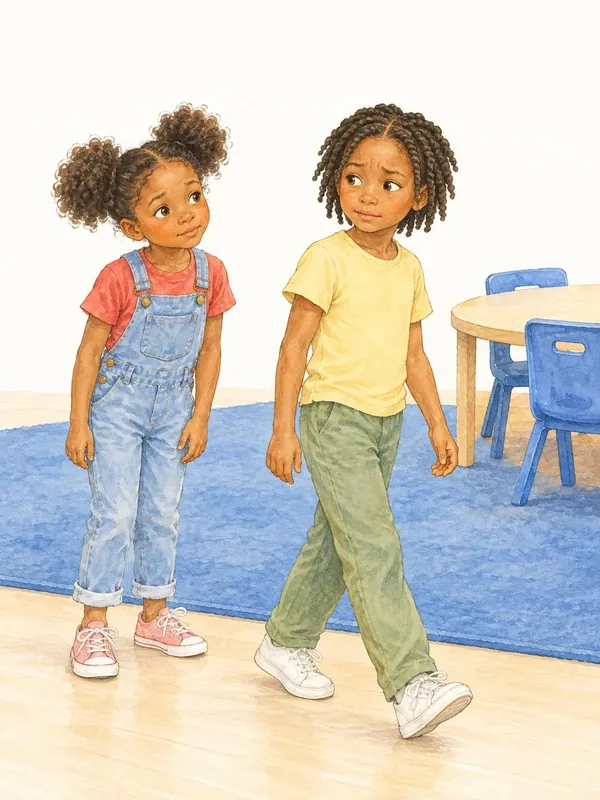
  2. Ava walks close behind Maya in the classroom, and Maya looks back at her.
    Page 1

    I stand close behind Maya in line. She steps forward to make room and glances back. I see how little space I left her.

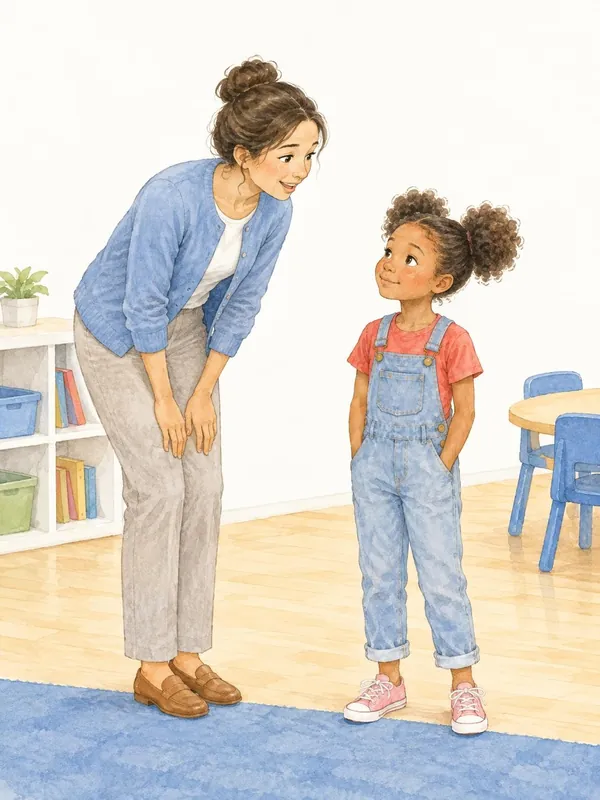
  3. Ava's teacher bends down to talk to her in the classroom.
    Page 2

    My teacher tells me, “Everyone has a space bubble around their body. We can give each other room.” I look at the space around me.

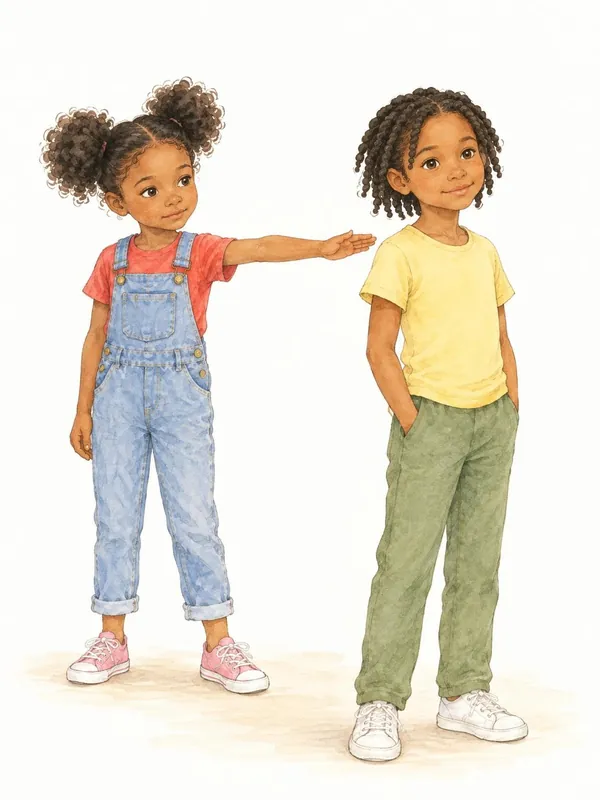
  4. Ava stretches her arm toward Maya and stops before she touches her.
    Page 3

    In line, I stretch my arm toward Maya. I stop before I touch her. My arm helps me see about how much space I can leave.

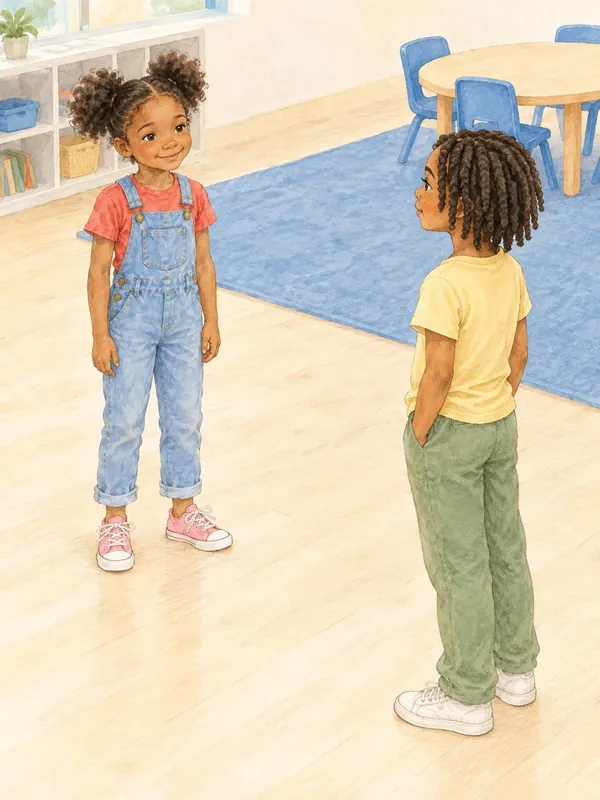
  5. Ava and Maya stand in the classroom with about an arm's length between them.
    Page 4

    I step back until there is about an arm’s length between Maya and me. Now she has room, and I have room too.

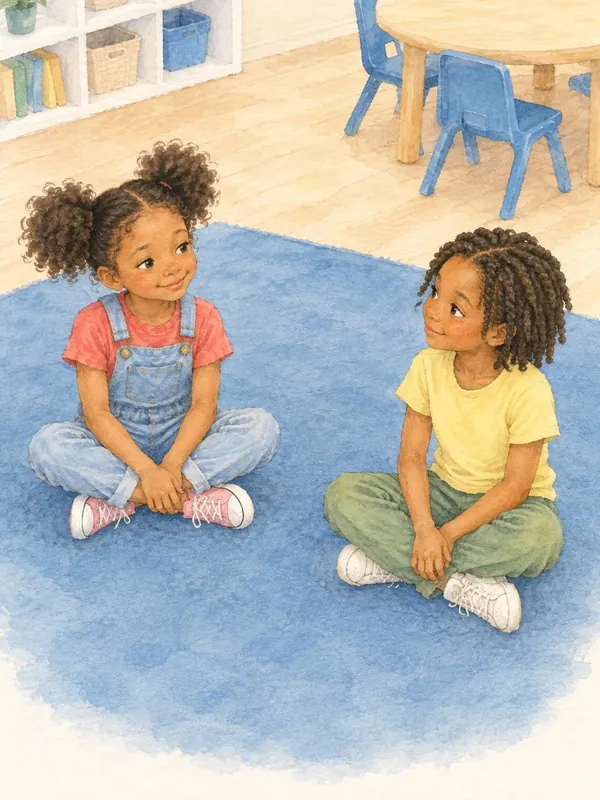
  6. Ava and Maya sit cross-legged on the carpet, an arm's length apart.
    Page 5

    On the carpet, I sit about an arm’s length from Maya. We both have room to sit comfortably. I can listen and play with her from here.

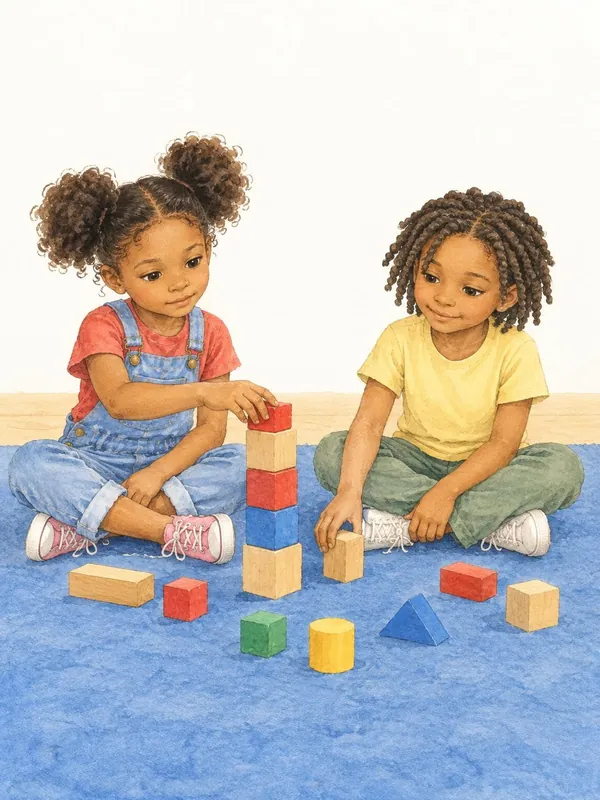
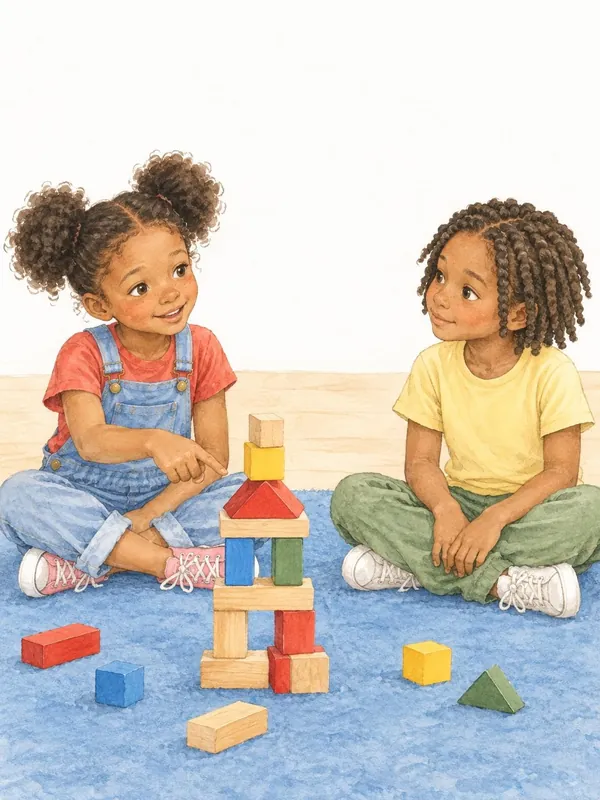
  7. Ava and Maya build with blocks on the carpet, each in her own space.
    Page 6

    Maya and I build with blocks. I leave room for her body and mine. We can both reach the blocks from our own spaces.

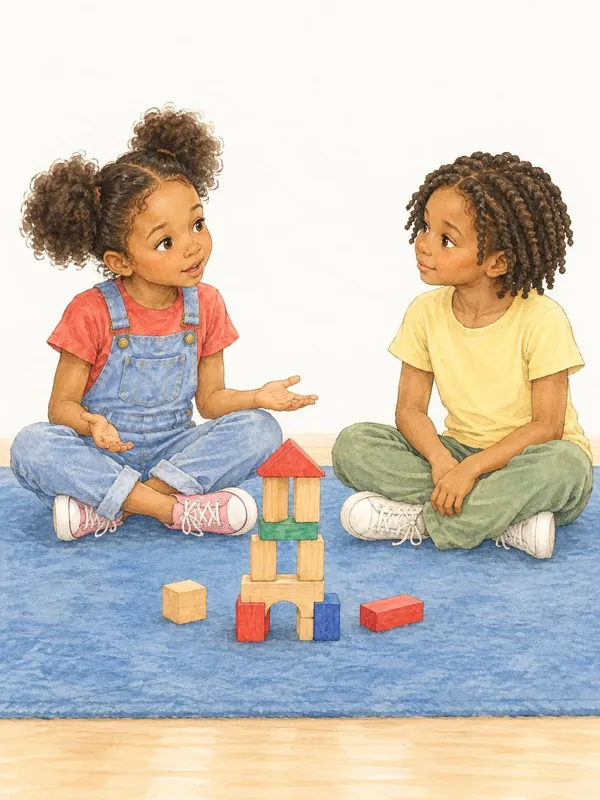
  8. Ava sits by the blocks and turns to ask Maya a question.
    Page 7

    I want to hug Maya. I stay where I am and ask, “May I give you a hug?”

  9. Maya answers while Ava stays in her own spot beside the block tower.
    Page 8

    “No, thank you,” Maya says. I stay in my own space. I can listen to her answer and keep building with her.

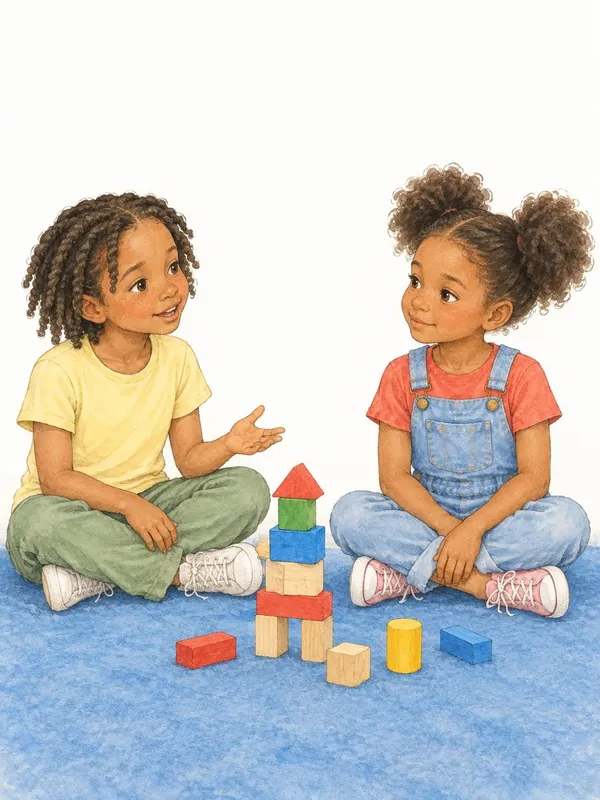
  10. Maya smiles and points at the tower while Ava gets ready to help.
    Page 9

    Maya smiles and points to our tower. “Would you add a block?” she asks. I look at the tower and get ready to help.

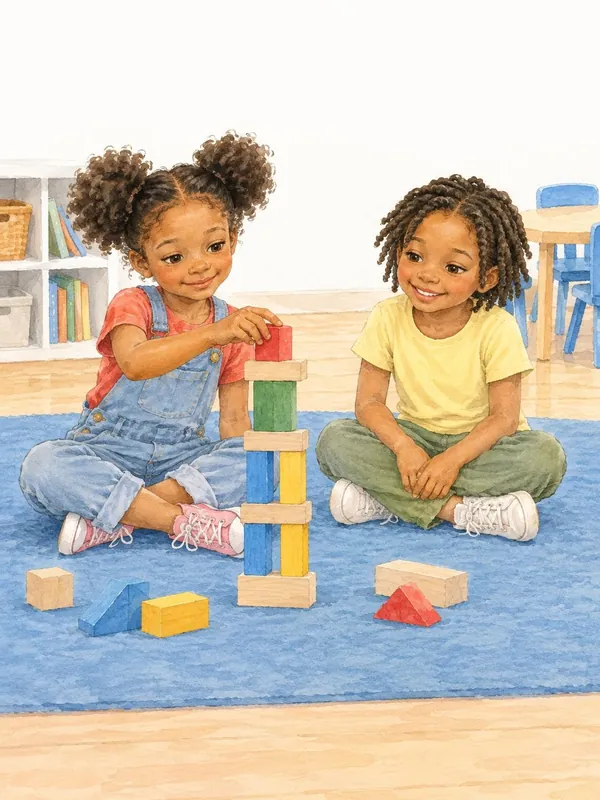
  11. Ava adds a red block to the top of the tower while Maya sits nearby.
    Page 10

    I add a red block to the top of our tower. Maya and I keep building, with about an arm’s length between us. She smiles at the tower, and I smile too.

Make my child’s story

Make this story starring your child. The idea is filled in for you.

What a good personal space story includes

  1. A picture of the invisible. A “space bubble” or “about an arm’s length” turns an abstract rule into something a child can measure with their own body.
  2. The places it matters. Lining up, the carpet at circle time, the block corner, the lunch table. Use the ones your child knows.
  3. Asking first. “May I give you a hug?” is the heart of it: being close is fine when the other person says yes.
  4. What to do with a no. In the sample, Maya says “No, thank you” and Ava keeps building with her. Children need to hear that a no isn’t the end of the friendship.
  5. Why it matters, in kid terms. “Their bodies feel safe and comfortable.” “They like playing with me.”

Teaching personal space at home

  • Measure it together. Stretch your arms out and turn in a slow circle: that’s the bubble. Try it before school or in a line at the store.
  • Practice asking. Take turns asking “May I give you a hug?” and answering yes and no. Praise the asker either way.
  • Use the same words as school. If the classroom says “bubble space” or “arm’s length”, say that too.
  • Read it at a calm time, every day for a week or two, then before busy places.
  • Notice it when it happens. “You asked before you hugged Grandma. That was your space bubble!”

If your child seems to need a lot of physical closeness, mention it to their teacher or pediatrician. A story teaches the rule; it doesn’t explain the need behind it.

Common questions

What is a space bubble?

An imaginary bubble around each person’s body, about an arm’s length wide. Children can picture it and check it by stretching out an arm.

What age is a personal space social story for?

Usually ages 3 to 7, when children start lining up, sitting together on the carpet and playing in groups.

Should the story say “no hugging”?

No. Teach asking instead: being close is fine when the other person says yes. That keeps the message positive and teaches consent at the same time.

How do I explain personal space to a 4-year-old?

Show it rather than say it. Stretch your arms out and turn around slowly: “This is my bubble. Yours is the same.” Then practice standing an arm’s length apart.

Can I print this story?

Yes. Use the Print this story button above the sample. It prints the cover and each page with its picture, one page per sheet.

Make this story starring your child

Add your child’s photo or describe them, and StorySafari writes this social story with them as the one leaving room and asking before a hug. The idea is filled in for you; change any detail to match their day. Preview the story and cover free.

Make my child’s story