Social stories

Following directions: a social story for preschool and kindergarten

When a child doesn’t follow a direction, it can look like defiance. More often, something got in the way: they were deep in play, they didn’t hear the whole thing, or they didn’t know how to do what was asked. A social story breaks following directions into steps a child can picture. It is a short, calm story, told in their own voice, about stopping, listening, asking and then doing.

Below is a complete sample to read or print, then how to practice it at home.
Free sample story

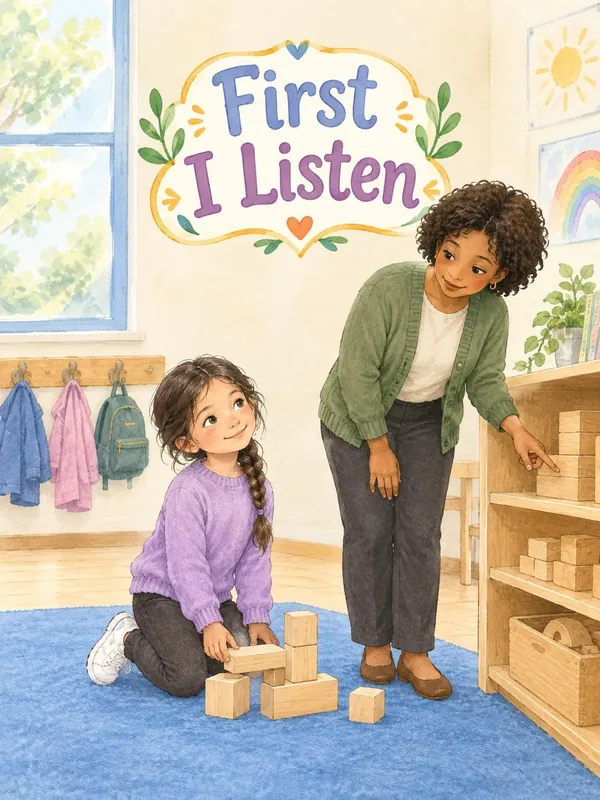
First I Listen

StorySafari wrote and illustrated this story from the same idea the button below fills in, with a made-up girl named Rosa.

  1. Book cover: First I Listen. A girl with a long braid puts blocks away while her teacher smiles nearby.
    Cover
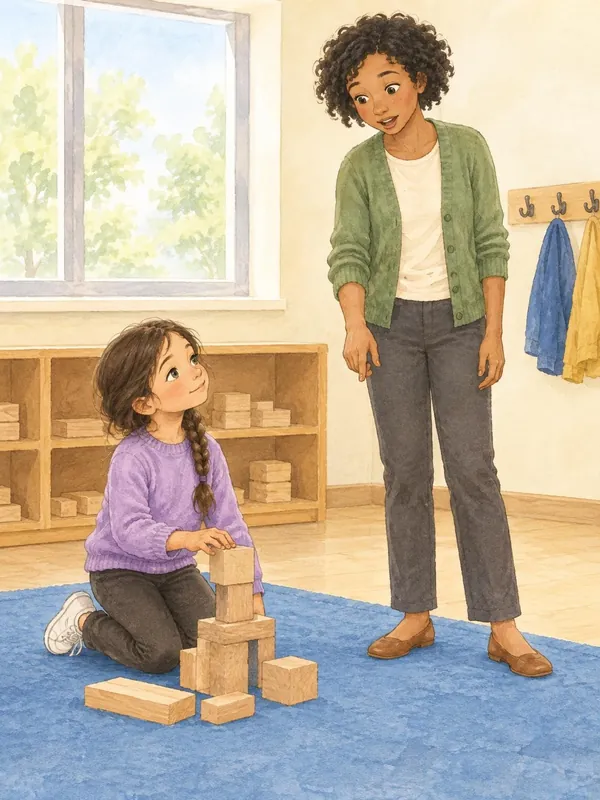
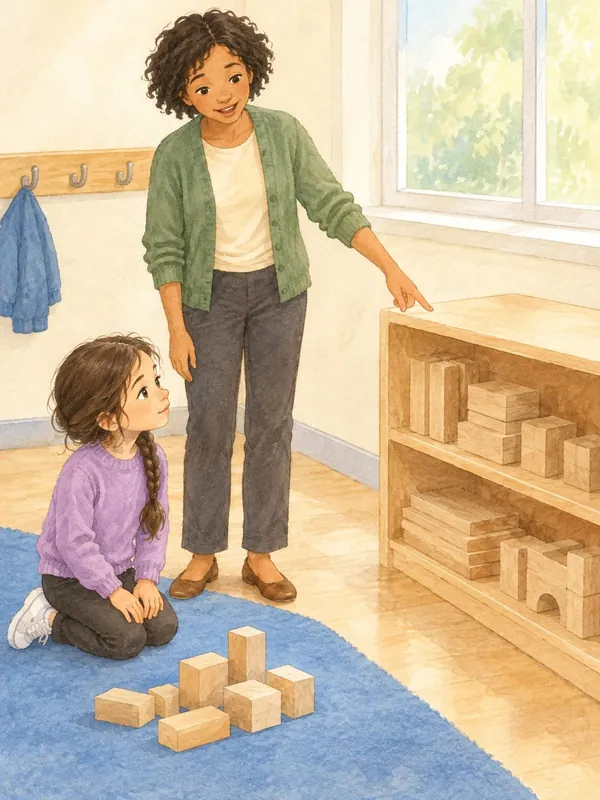
  2. Rosa kneels by a stack of blocks on the rug and looks up at her teacher.
    Page 1

    I was building with blocks on the rug. My teacher said, “Please put the blocks away so everyone can move safely.” I looked up at my teacher. The blocks were still in a little stack.

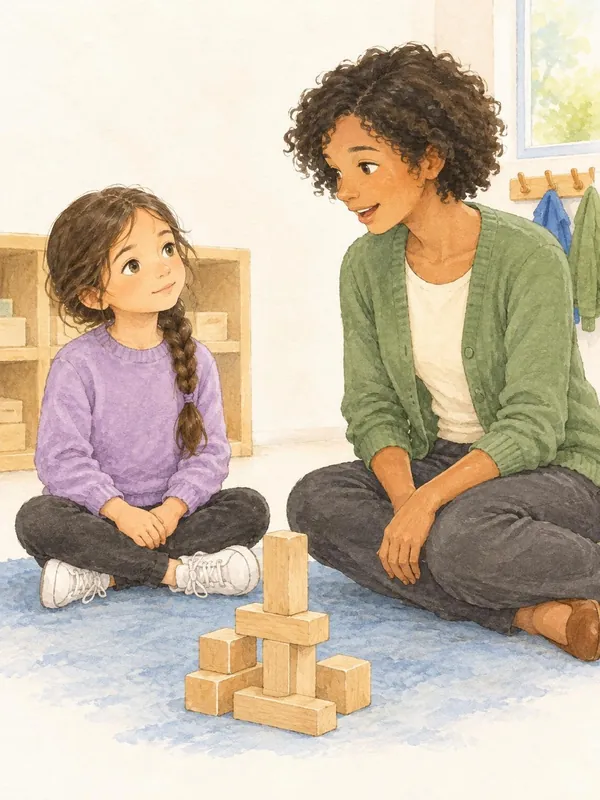
  3. Rosa sits back from the blocks and looks at her teacher, who sits beside her.
    Page 2

    I stop building. I sit back from the blocks and put my hands in my lap. I look at my teacher and listen.

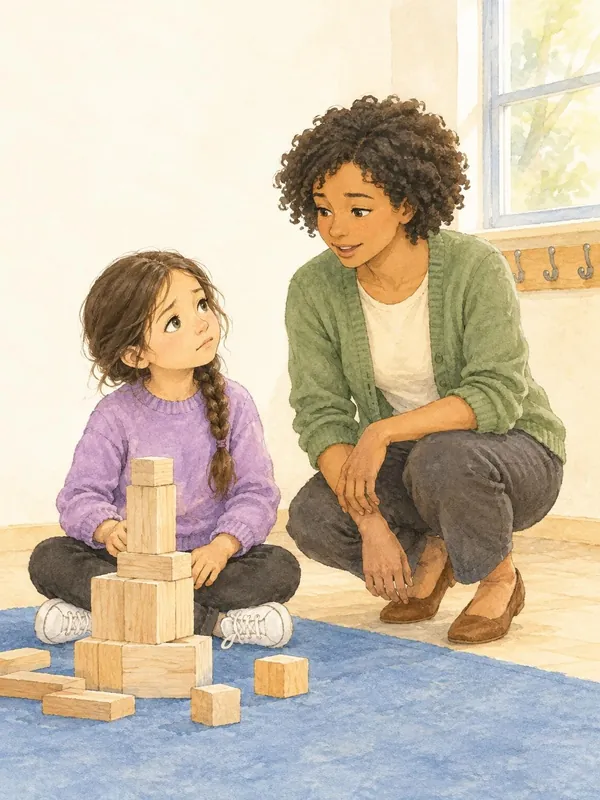
  4. Rosa's teacher crouches beside her by the blocks and talks with her.
    Page 3

    I want to keep building. My teacher says, “You can play with the blocks again later.” I can put them away first.

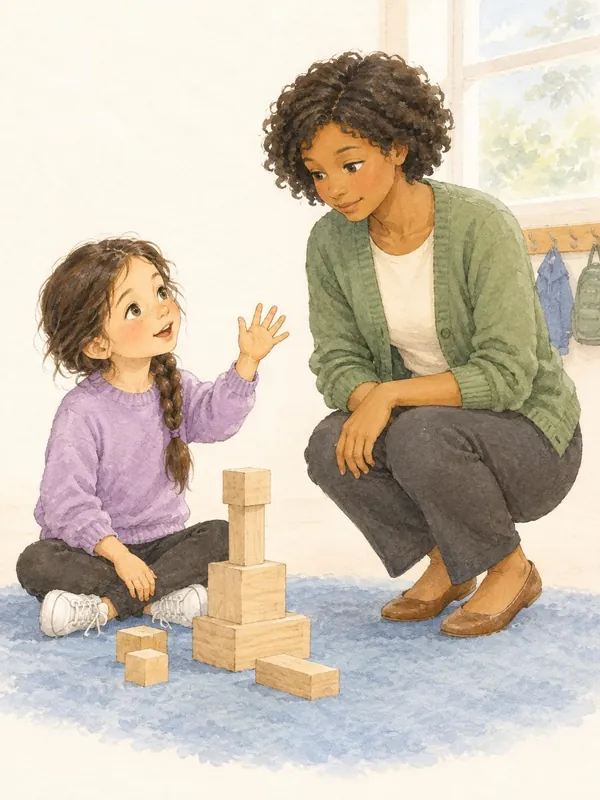
  5. Rosa raises her hand to ask her teacher a question.
    Page 4

    I am not sure where the blocks go. I raise my hand. “Where do the blocks go?” I ask my teacher.

  6. Rosa's teacher points to the low shelf where the blocks go.
    Page 5

    My teacher points to the low shelf. “Put the blocks here, please,” she says. I look from the blocks to the shelf. Now I know where they go.

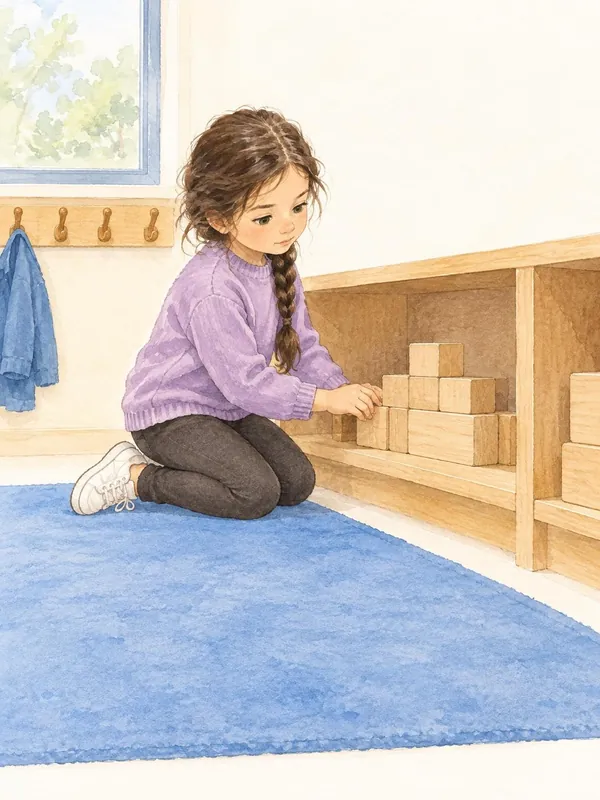
  7. Rosa puts the last block on the shelf.
    Page 6

    I put the last block on the shelf. The rug is clear.

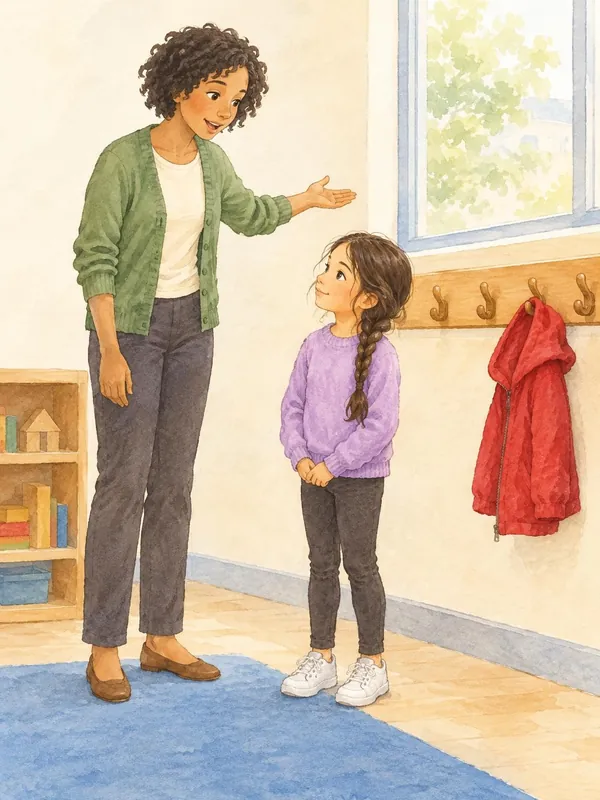
  8. Rosa's teacher points toward the coat hooks.
    Page 7

    My teacher says, “Please get your coat so you are ready to go outside.” I look at her and hear what she asks.

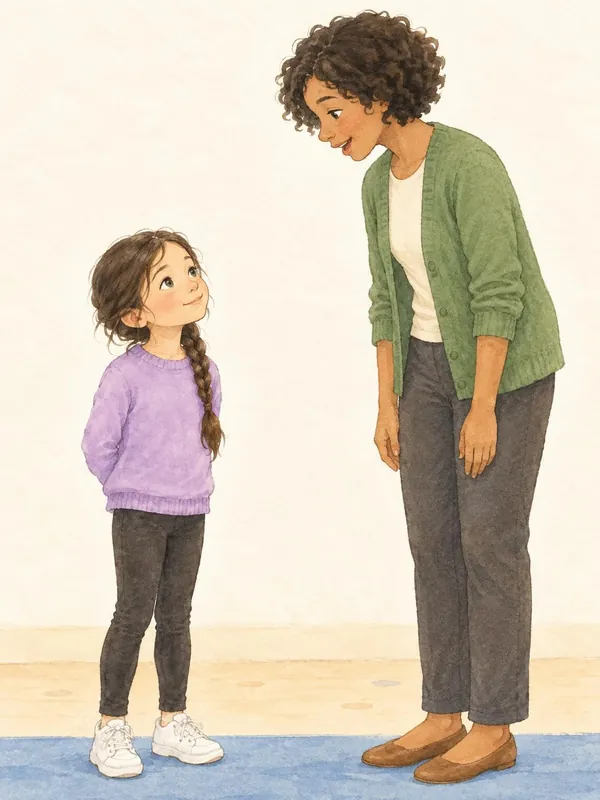
  9. Rosa stands still and looks up at her teacher.
    Page 8

    I stop. I look at my teacher and listen. She asked me to get my coat. Now I know what to do.

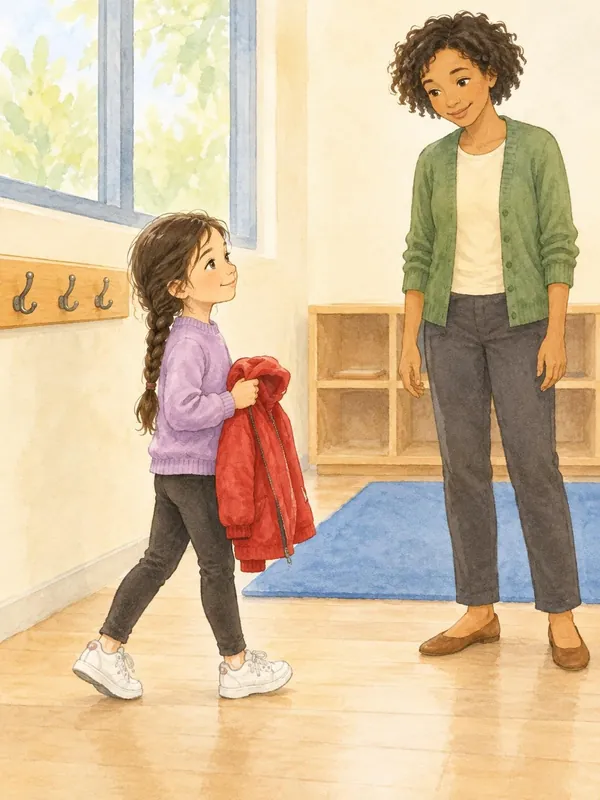
  10. Rosa carries her red coat across the classroom.
    Page 9

    I take my coat from its hook. I carry it to my teacher in both hands. She smiles at me.

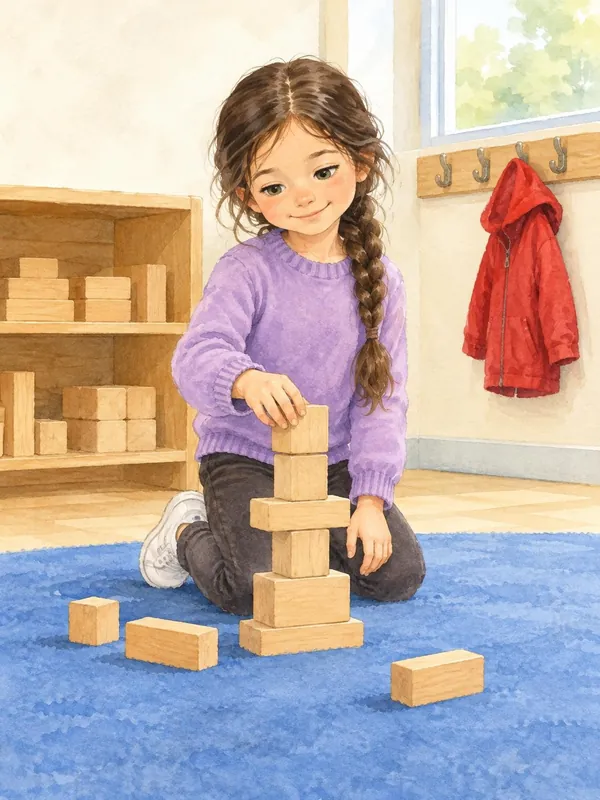
  11. Rosa sits on the rug and builds a new block tower.
    Page 10

    Later, I am back in the classroom. I take blocks from the shelf and build again. I add one block to my new stack. I smile.

Make my child’s story

Make this story starring your child. The idea is filled in for you.

What a good following-directions story includes

  1. Why grown-ups give directions. “To help everyone learn and stay safe.” A reason makes a direction feel less random.
  2. What listening looks like. Stop, look at the teacher, hands still. Concrete actions work better than “pay attention”.
  3. Permission to ask. “If I don’t understand, I can raise my hand and ask.” Many children freeze when they’re unsure.
  4. Everyday directions. Clean-up and getting a coat: real, short and done every day.
  5. The hard feeling. “Sometimes I want to keep playing, and that is okay.”
  6. A “first, then”. “I can do the direction first and play again later.” The sample ends with the blocks coming back out, so the promise is kept.

Practicing at home

  • Get close before you give a direction. Say their name, wait for them to look up, then speak.
  • One step at a time. “Put your shoes by the door” works better than three instructions in one breath.
  • Use “first, then”. “First shoes, then the park.” And keep the “then”.
  • Warn before changes. “Two more minutes of blocks, then clean-up.”
  • Ask them to say it back. “What are we doing first?” helps them check they heard it.
  • Notice it. “You stopped and listened right away, just like in your story!”

Common questions

What age is a following-directions social story for?

Preschool and kindergarten, when children start following classroom routines like clean-up, lining up and getting ready to go outside.

My child doesn’t listen at home either. Will this help?

It can help by giving you shared words: stop, look, listen, ask. Pair it with short, one-step directions and a warning before changes. If listening is hard everywhere, ask your pediatrician whether a hearing check makes sense.

What does “first, then” mean?

Saying the direction first and the thing your child wants next: “First coat, then outside.” It works best when the “then” always happens.

Should the story include consequences?

Keep it positive. A social story describes what to do and why; consequences belong to your house and classroom rules, not to the story.

Can I print this story?

Yes. Use the Print this story button above the sample. It prints the cover and each page with its picture, one page per sheet.

Make this story starring your child

Add your child’s photo or describe them, and StorySafari writes this social story with them as the one who stops, listens and asks when they’re not sure. The idea is filled in for you; change any detail to match their classroom. Preview the story and cover free.

Make my child’s story