Social stories

Sharing and taking turns: a social story for preschoolers

Sharing is one of the hardest things we ask of preschoolers. When a child grabs a toy, it usually isn’t selfishness: waiting is hard, and they don’t yet trust that a turn will come. A social story makes the turn visible. It is a short, calm story, told in your child’s own voice, that shows waiting, asking, playing and giving the toy back.

Below is a complete sample to read or print, then how to practice turn-taking so it carries over to the playroom.
Free sample story

My Turn, Your Turn

StorySafari wrote and illustrated this story from the same idea the button below fills in, with a made-up girl named Lily.

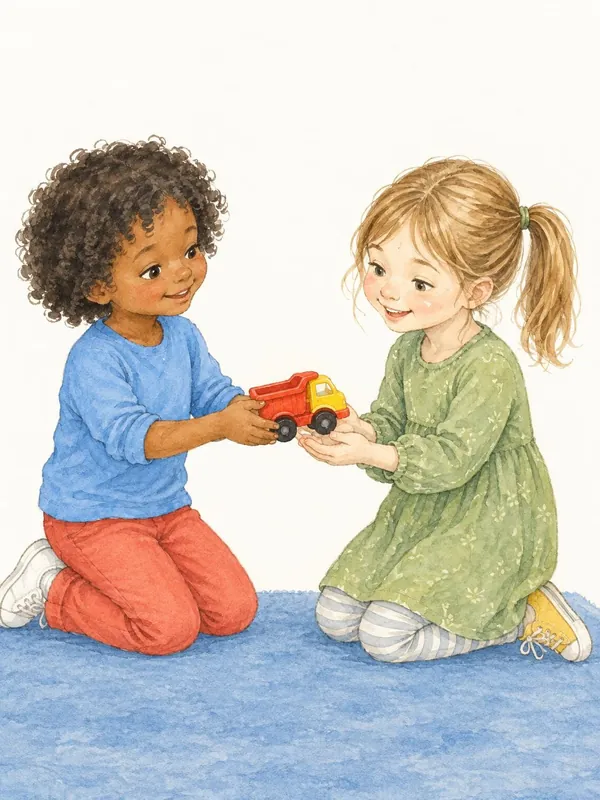
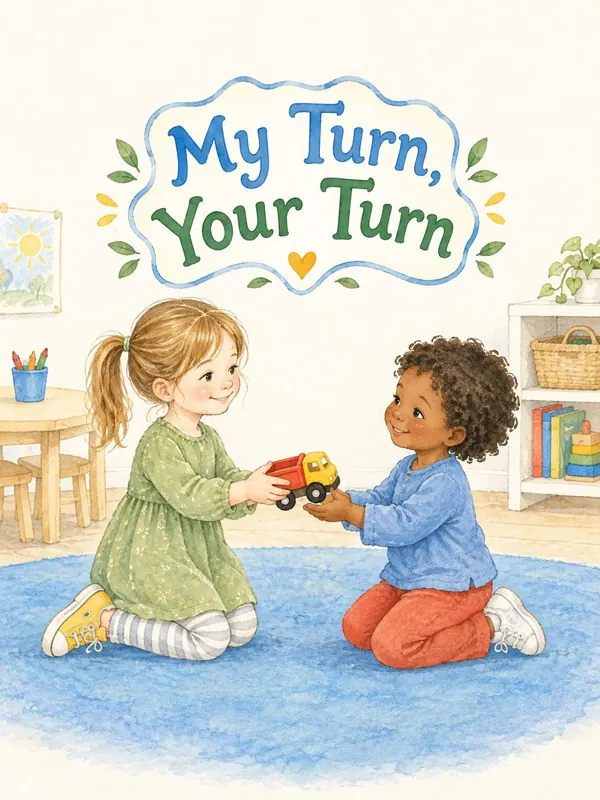
  1. Book cover: My Turn, Your Turn. A girl with a ponytail hands a toy truck to a friend on a blue rug.
    Cover
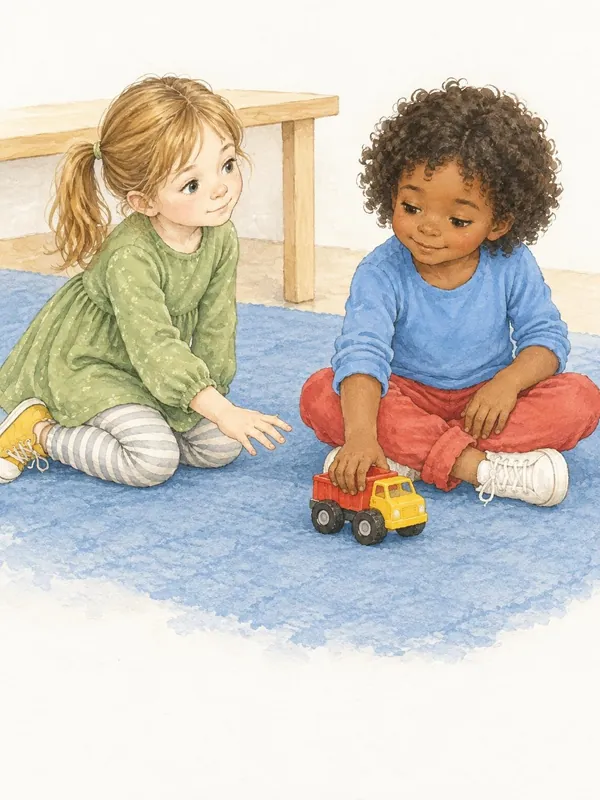
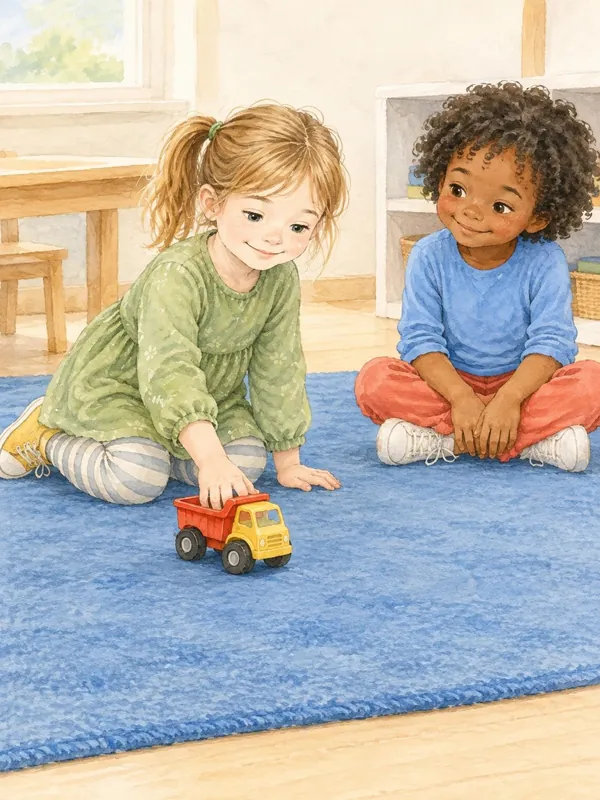
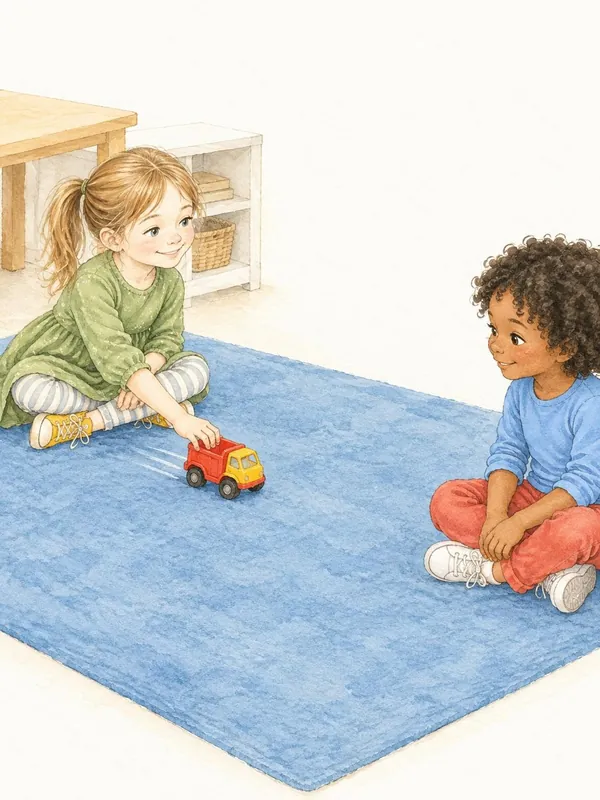
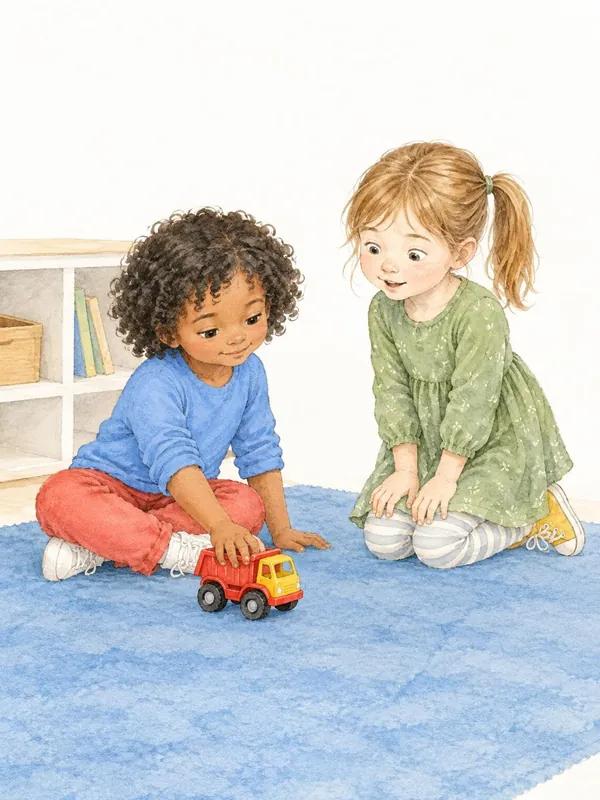
  2. Maya plays with a toy truck on the rug while Lily kneels nearby and watches.
    Page 1

    At preschool, my friend Maya rolls the truck across the rug. I want to play with it, too. I kneel nearby and watch her play.

  3. Lily kneels on the rug while Maya keeps rolling the truck.
    Page 2

    I reach for the truck. Then I see Maya is still rolling it. I stop my hand. Maya is using the truck now.

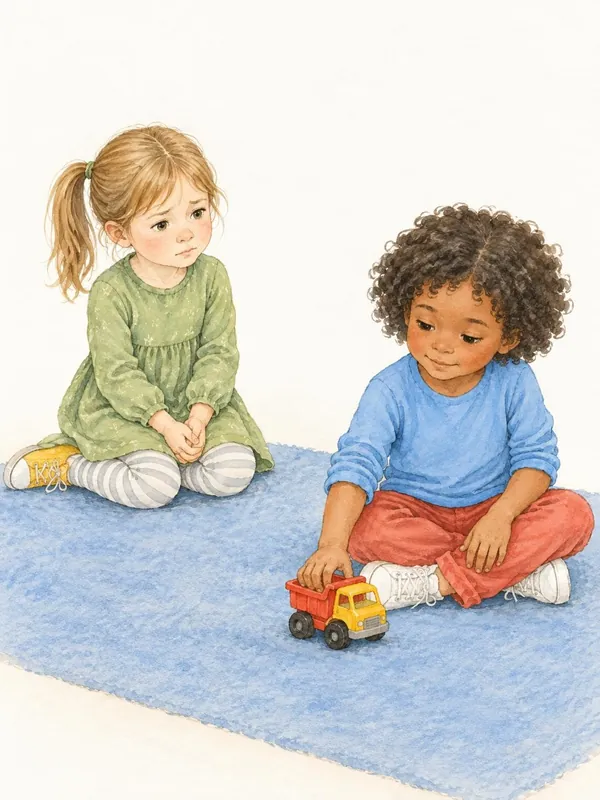
  4. Lily sits with her hands together, waiting, while Maya plays with the truck.
    Page 3

    I want the truck now. Waiting feels hard. I hold my hands together and watch Maya play.

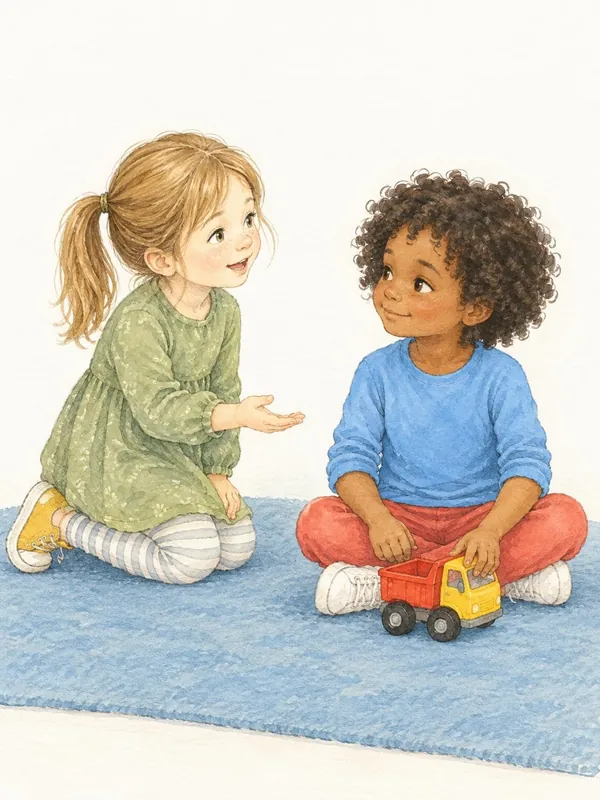
  5. Lily turns to Maya and asks for a turn.
    Page 4

    I look at Maya. “Can I have a turn when you're done?” I ask.

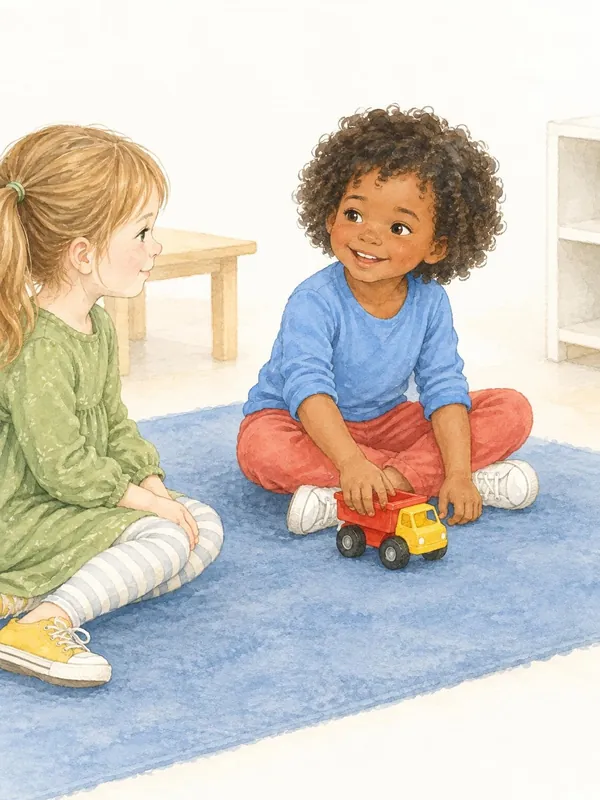
  6. Maya smiles and keeps playing with the truck while Lily waits nearby.
    Page 5

    “Yes,” Maya says with a smile. She keeps rolling the truck. I wait nearby while Maya plays.

  7. Maya hands the truck to Lily, who takes it with both hands.
    Page 6

    When Maya is done, she gives me the truck. I take it with both hands. “Thank you,” I say.

  8. Lily rolls the truck across the rug while Maya watches.
    Page 7

    Now it is my turn. I roll the truck across the rug. Maya watches me play.

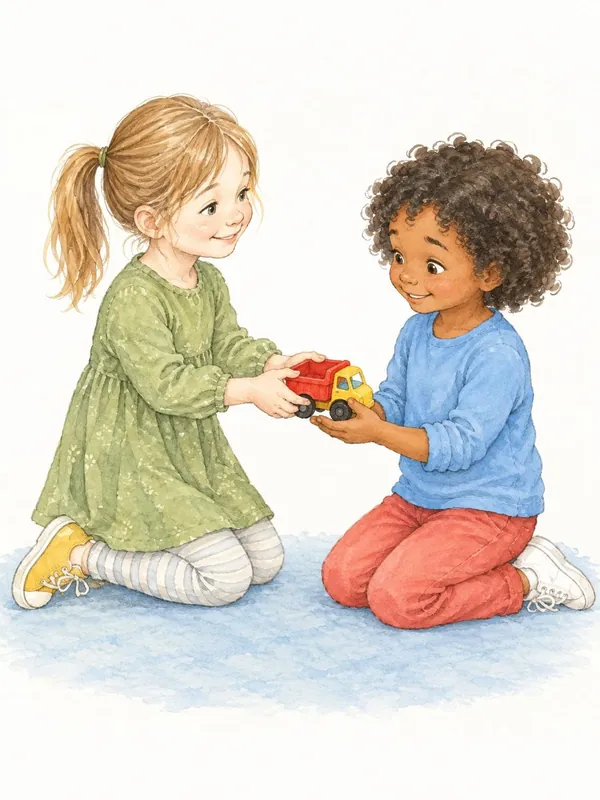
  9. Lily gives the truck back to Maya.
    Page 8

    When my turn is over, I give the truck back to Maya. She takes it with both hands.

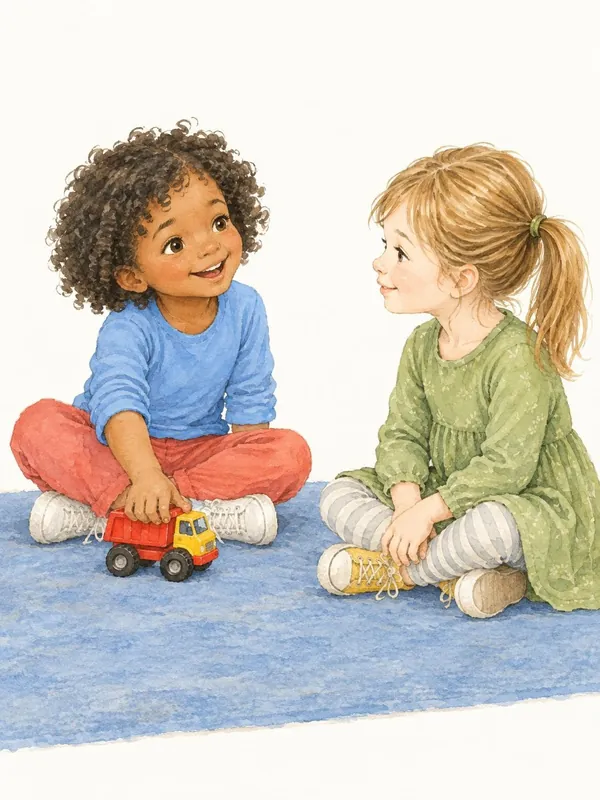
  10. Lily and Maya sit facing each other on the rug and smile, with the truck between them.
    Page 9

    Maya rolls the truck toward me. “Do you want to keep playing with me?” she asks. “Yes,” I say.

  11. Lily and Maya roll the truck back and forth across the rug.
    Page 10

    Maya rolls the truck to me. I roll it back to her. We keep taking turns, rolling the truck across the rug. “Let’s keep playing!” Maya says. I smile and roll it to her again.

Make my child’s story

Make this story starring your child. The idea is filled in for you.

Sharing or taking turns?

For young children, taking turns is easier to understand than sharing. “Share” can sound like “give it away forever”. A turn has a beginning and an end: your friend plays, then you play, then your friend plays again. That’s why the sample never asks Lily to give up the truck for good. It shows one turn ending and the next one starting.

What a good taking-turns story includes

  1. The wait, named honestly. “Waiting feels hard.” Children trust a story that admits it.
  2. Something to do while waiting. Hold hands together, watch, count, or play with something else nearby.
  3. The asking words. “Can I have a turn when you’re done?” Short, polite and easy to say.
  4. The turn actually coming. The friend finishes and hands it over. This is the part children don’t believe yet.
  5. Giving it back. The story shows the end of my turn too, so it works both ways.
  6. Why it matters. Everyone gets to play, and friends want to keep playing with me.

Practicing at home

  • Play turn-taking games. Roll a ball or a car back and forth, build a tower one block each, or play simple board games.
  • Use a timer for big-ticket toys. A sand timer or kitchen timer makes “when you’re done” concrete.
  • Say the words for them at first. “Can I have a turn when you’re done?” Then let them try.
  • Let them keep some things. A special toy that never has to be shared makes the rest easier.
  • Notice good waiting. “You waited for the truck and asked. Now it’s your turn!”

Common questions

When do children learn to take turns?

Turn-taking grows a lot during the preschool years. Many 3-year-olds still need a grown-up to run the turns; by 4 or 5, many can wait a short while and ask with fewer reminders. Expect practice, not perfection.

Should I make my child share everything?

No. Turns work best for toys that belong to everyone, like at preschool. It’s fine for a child to put away one or two special toys before a friend comes over.

What if my child grabs anyway?

Calmly give the toy back to the friend, then help your child say the asking words and wait. Read the story again later, when everyone is calm, never as a punishment.

How long should a turn be?

Short at first: a minute or two, or one run of a sand timer, so the wait feels possible. Make turns longer as waiting gets easier.

Can I print this story?

Yes. Use the Print this story button above the sample. It prints the cover and each page with its picture, one page per sheet.

Make this story starring your child

Add your child’s photo or describe them, and StorySafari writes this social story with them as the one who waits, asks for a turn and gives it back. The idea is filled in for you; change any detail to match their day. Preview the story and cover free.

Make my child’s story